7 Ingredients That Destroy Your Spray Tan
You spent the money. You did the prep. You waited the full 8 hours before showering. And by day 3, your spray tan is already fading unevenly — splotchy on your arms, streaky on your legs, practically gone on your hands.
The problem usually isn't the spray tan itself. It's what you're putting on your skin afterward.
Most conventional lotions, body washes, and skincare products contain ingredients that actively strip, dissolve, or accelerate the fading of DHA — the compound that creates your spray tan color. DHA works by reacting with amino acids in the outermost layer of your skin (the stratum corneum). Anything that disrupts that layer or chemically interferes with DHA will shorten your tan's life.
Here are the 7 worst offenders and what to reach for instead.
1. Mineral Oil
What it does to your tan: Mineral oil is an occlusive — it creates a thick film on the surface of your skin. While that sounds moisturizing, it actually lifts DHA-stained cells unevenly as the film shifts and breaks down. The result is patchy, blotchy fading instead of a smooth, gradual transition.
Where you'll find it: Baby oil, many drugstore lotions (check the first 5 ingredients), some body oils marketed as "hydrating."
What to use instead: Plant-based emollients like coconut oil and shea butter moisturize without creating a heavy occlusive barrier. They absorb into the skin rather than sitting on top of it. A spray tan safe lotion will rely on these types of ingredients instead.
2. Alcohol (Ethanol, Denatured Alcohol, Isopropyl Alcohol)
What it does to your tan: Alcohol is a solvent. It dissolves oils and strips the lipid barrier that holds your skin cells together. When that barrier breaks down, DHA-stained cells shed faster and more unevenly. High concentrations of alcohol can visibly lighten a spray tan within a single application.
Where you'll find it: Toners, astringents, hand sanitizers, many body sprays, and some "fast-absorbing" lotions that use alcohol to create a lightweight feel.
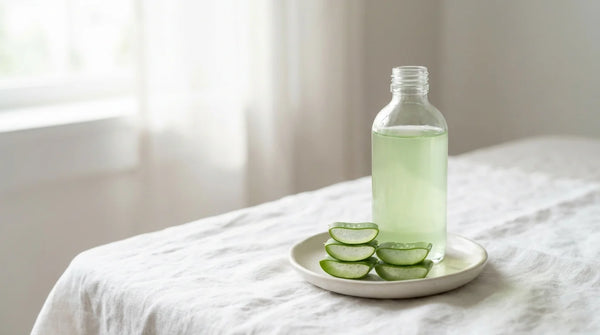
What to use instead: Glycerin is an excellent humectant that draws moisture into the skin without stripping anything. Aloe vera provides hydration with a lightweight feel — no alcohol needed for fast absorption.
3. AHAs (Glycolic Acid, Lactic Acid, Citric Acid)
What it does to your tan: Alpha hydroxy acids are chemical exfoliants. Their entire purpose is to dissolve the bonds between dead skin cells so they shed faster. Since your spray tan lives on those exact dead skin cells, AHAs are essentially DHA removers.
Where you'll find it: "Brightening" lotions, anti-aging serums, some body washes (especially those marketed for rough or bumpy skin), exfoliating toners.
What to use instead: If you want smoother skin texture without sacrificing your tan, focus on consistent hydration. Shea butter and glycerin improve skin feel without accelerating cell turnover. Save the AHAs for your pre-tan exfoliation, 48 hours before your appointment.
4. Retinol (Vitamin A Derivatives)
What it does to your tan: Retinol increases skin cell turnover rate. That's what makes it effective for anti-aging — it pushes new cells to the surface faster. But faster turnover means your DHA-stained cells are replaced sooner. A retinol-heavy routine can cut your spray tan's lifespan by 2 to 3 days.
Where you'll find it: Anti-aging creams, serums, prescription treatments (tretinoin), some "renewal" body lotions.
What to use instead: Carrot seed hydrate provides skin-nourishing benefits and supports the skin's natural moisture barrier without accelerating cell turnover. It also complements warm tan tones naturally. Look for a moisturizer designed for post-spray-tan care.
5. Fragrance (Parfum)
What it does to your tan: "Fragrance" or "parfum" on an ingredient list is a catch-all term that can represent dozens of undisclosed chemicals. Many synthetic fragrance compounds contain alcohol bases and volatile solvents that dry out the skin and destabilize DHA bonds. Even fragrances that don't contain alcohol can irritate the skin, triggering increased cell turnover.
Where you'll find it: Almost every conventional body lotion, body wash, and moisturizer. If it smells like anything other than its base ingredients, check the label.
What to use instead: Fragrance-free products. Not "unscented" — that often means fragrance was added to mask other smells. Look for "fragrance-free" specifically, which means no fragrance compounds were used at all. Products formulated with ingredients like aloe vera and coconut oil have a mild, natural scent without any added fragrance chemicals.
6. Petroleum (Petrolatum, Petroleum Jelly)
What it does to your tan: Similar to mineral oil, petroleum creates a heavy occlusive layer. It traps moisture, but it also traps everything else — including sweat, which contains salt that can break down DHA. The thick barrier also causes uneven wear patterns, especially in areas where skin folds or clothes create friction (inner elbows, behind knees, waistline).
Where you'll find it: Vaseline, many "intensive moisture" creams, lip balms, some diaper rash creams repurposed for skin care.
What to use instead: Emollient-rich formulas that absorb rather than sit. Shea butter, coconut oil, and emulsifying wax create a moisture barrier that works with the skin instead of sealing it off. These support DHA longevity rather than undermining it. See our guide to spray tan aftercare lotions.
7. SLS (Sodium Lauryl Sulfate)
What it does to your tan: SLS is a surfactant — a foaming agent used in body washes, shampoos, and soaps. It's extremely effective at stripping oils from the skin, which is why it creates that "squeaky clean" feeling. But that stripping action removes the natural oils that keep your DHA-stained skin cells hydrated and intact. Daily SLS exposure can cut 2 to 4 days off a spray tan.
Where you'll find it: Most conventional body washes, shampoos, bar soaps, and even some "gentle" cleansers. It's one of the most common surfactants in personal care products.
What to use instead: Sulfate-free body washes that use gentler surfactants (look for ingredients ending in "-glucoside" or "coco-betaine"). When washing, use your hands instead of a loofah or washcloth, and keep water lukewarm.
How to Check Your Products
Before using any lotion, body wash, or skincare product on a spray tan, flip it over and scan the first 10 ingredients. That's where the highest-concentration ingredients are listed. If you see any of these 7, it's working against your tan:
- Mineral oil / paraffinum liquidum
- Alcohol denat / ethanol / isopropyl alcohol
- Glycolic acid / lactic acid / citric acid
- Retinol / retinyl palmitate / tretinoin
- Fragrance / parfum
- Petrolatum / petroleum
- Sodium lauryl sulfate / sodium laureth sulfate
The simplest approach: use products with short, recognizable ingredient lists. If you can't pronounce half the label, your spray tan probably can't survive it either. A non-toxic body lotion with clean ingredients is a safer bet. For more on what makes a lotion truly seed-oil-free and spray-tan compatible, check our ingredient breakdown.

8 ingredients. Grass-fed tallow + aloe vera. Nothing you can't pronounce.
The Takeaway
Your spray tan fades faster because of what's in your lotion, not because of the tan itself. Avoid these 7 ingredients, switch to a clean formula with recognizable, skin-friendly components, and your color will last days longer with more even fading. It's not complicated — it just requires reading the label.
Related Reading
This post is for informational purposes only. It is not medical advice.