You want tallow on your skin. You don't want to fight it getting there.
You've done the research. You know grass-fed beef tallow is one of the most biocompatible fats you can put on your skin — fatty acid profile that mirrors human sebum, fat-soluble vitamins A, E, and K, conjugated linoleic acid. The science checks out. So you buy a jar of tallow balm, twist off the lid, and dig your fingers into what feels like cold butter.
It doesn't spread. It sits on top of your skin in a thick, waxy layer. You rub harder. It gets warm and starts to melt, but now your hands are coated and everything you touch gets a grease print. Your shirt sticks to it. Twenty minutes later, you still feel it sitting on the surface.
This is the experience that turns people away from tallow skincare — not because tallow doesn't work, but because the format doesn't work for daily life. The problem isn't the ingredient. It's the delivery system.
What's actually different between a balm and a lotion
This isn't a branding distinction. It's a formulation science distinction, and it changes how the product behaves on your skin.
Tallow balm: anhydrous formulation
A balm is anhydrous — meaning it contains no water. It's rendered tallow (sometimes blended with other oils or butters) that's been cooled into a solid or semi-solid state. The consistency depends on the fatty acid ratios and any added waxes, but the defining characteristic is that it's 100% oil phase. No water. No emulsion.
When you apply a balm, you're laying a layer of fat on your skin. That fat has to melt from your body heat before it can start to absorb. Once melted, it penetrates slowly because there's no water phase to carry it into the stratum corneum. It sits on the surface as an occlusive layer — which is useful in some situations, but impractical for daily full-body use.
Tallow lotion: oil-in-water emulsion
A lotion is an emulsion — a stable mixture of oil and water phases held together by an emulsifier. The tallow (oil phase) is dispersed as tiny droplets within a water-based phase. When you apply it, the water phase spreads easily across your skin and begins absorbing immediately. As the water evaporates and absorbs, it carries the tallow's fatty acids and fat-soluble vitamins into the upper layers of the skin.
The result: same tallow nutrients, dramatically different user experience. Faster absorption. No greasy residue. Even coverage over large areas. Compatible with clothing immediately after application.
When a tallow balm makes sense
Balms aren't useless. There are specific situations where a thick, occlusive, anhydrous format is the right tool.
- Overnight spot treatment. Small patches of extremely dry or cracked skin (knuckles, elbows, heels) benefit from a thick occlusive layer that stays put for hours while you sleep.
- Extreme cold weather protection. In sub-zero temperatures, a heavy balm creates a physical barrier against wind and cold that a lighter lotion can't match.
- Very small application areas. If you're treating a quarter-sized patch of dry skin, the thickness of a balm isn't a drawback because you're not trying to cover your whole body.
But here's the honest truth: the vast majority of people reaching for tallow skincare are looking for a daily moisturizer. They want something for their arms, legs, face, and torso. They want to apply it in the morning and get dressed. They want it to absorb, not sit. For that use case — which is most use cases — a balm is the wrong format.
Why tallow lotion wins for daily use
The lotion format solves every practical complaint people have about tallow balms — without sacrificing the ingredient benefits that made them interested in tallow in the first place.
Absorption speed. A water-based emulsion begins absorbing on contact. The water phase pulls tallow's fatty acids and vitamins into the skin rather than waiting for body heat to melt a solid. Most people feel a tallow lotion fully absorb within 2-3 minutes. Balms can take 15-30 minutes and often never fully absorb.
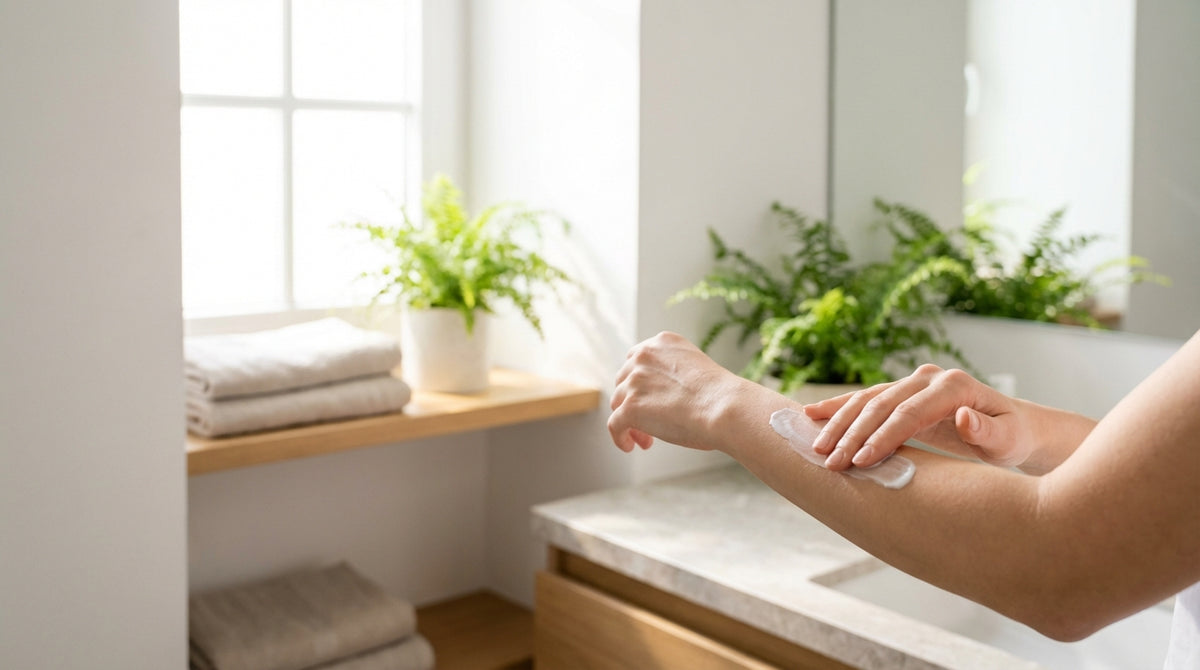
Coverage efficiency. A pump of lotion covers an entire forearm evenly. Achieving the same coverage with a balm requires warming a chunk between your palms, spreading it unevenly, then going back to fill in gaps. For full-body application, the time difference is significant.
Layering compatibility. Lotion absorbs cleanly, which means you can apply sunscreen, makeup, or clothing over it without interference. Balm leaves an oil layer that disrupts anything applied on top of it.
No temperature sensitivity. Balms change consistency dramatically with temperature. In summer heat, they can melt into liquid in the jar. In winter, they harden into something you need to chisel. A lotion maintains the same pumpable consistency regardless of ambient temperature.
Daily compliance. This is the factor that matters most and gets discussed least. The best skincare ingredient in the world does nothing if you stop using it because the application experience is unpleasant. Lotion format removes friction from the daily routine, which means you actually use it consistently — and consistency is what delivers results.
Why most tallow brands only sell balms
If lotion is clearly better for daily use, why do most tallow brands sell balms? The answer is formulation complexity.
Making a tallow balm is straightforward. You render tallow, melt it, optionally add essential oils, pour it into a jar, and let it cool. No emulsification required. No preservative system needed (anhydrous products resist microbial growth because bacteria need water). No stability testing for phase separation. A person with a kitchen and a few YouTube videos can produce a tallow balm.
Making a tallow lotion is genuinely difficult. You need to create a stable emulsion — forcing oil and water to coexist in a uniform mixture that won't separate on the shelf. This requires precise temperatures during mixing, the right emulsifier at the right concentration, and a preservative system to prevent microbial growth in the water phase. The formulation has to be tested for stability over time, across temperature ranges, and through shipping conditions.
Most small tallow brands don't have the formulation expertise or equipment to create a stable lotion. So they sell what they can make: balms. That's not a criticism — it's just the reality of why the tallow skincare market is dominated by a format that most people find impractical for daily use.
The AloeTallow formula: 8 ingredients, lotion format, built for daily use
We built AloeTallow lotion specifically because we wanted tallow's benefits in a format people would actually use every day. Here's every ingredient in the bottle and why it's there.
1. Grass-Fed Beef Tallow
The foundation. Grass-fed tallow's fatty acid profile — oleic acid, palmitic acid, stearic acid, conjugated linoleic acid — closely mirrors the lipid composition of human sebum. That biocompatibility means your skin recognizes and integrates it efficiently rather than treating it as a foreign substance. It delivers fat-soluble vitamins A, E, and K directly into the skin's lipid matrix.
2. Aloe Vera
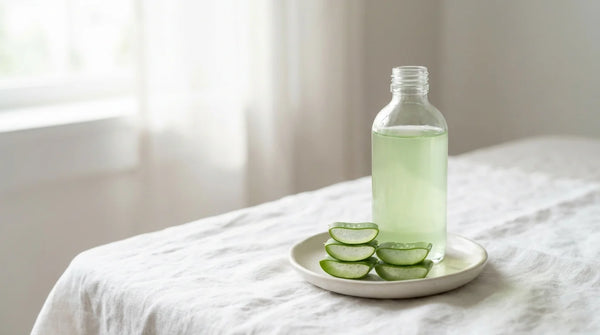
This is the ingredient that makes the lotion format possible — and powerful. Aloe vera provides the water phase of the emulsion while delivering its own benefits: acemannan polysaccharides that support skin's moisture retention and anti-inflammatory compounds that calm irritation. Tallow feeds the skin's lipid barrier. Aloe hydrates the tissue beneath it. Together, they address both sides of the moisture equation — oil and water — which neither can do alone.
3. Coconut Oil
Rich in lauric acid, which has documented antimicrobial properties. Coconut oil reinforces the oil phase and contributes to the lotion's smooth, even texture. It absorbs relatively quickly for a saturated fat, complementing tallow's heavier fatty acids.
4. Shea Butter
Packed with vitamins A and E plus anti-inflammatory compounds including lupeol cinnamate. Shea butter adds richness to the formula without heaviness, and its triterpene content supports skin's natural collagen production processes.
5. Carrot Seed Oil
A concentrated source of beta-carotene (provitamin A) and antioxidants. Carrot seed oil protects against oxidative stress that degrades collagen and elastin. It adds a subtle nutrient boost to the formula without altering the texture.
6. Glycerin
A humectant — meaning it draws moisture from the environment and deeper skin layers into the stratum corneum. Glycerin is one of the most well-studied moisturizing ingredients in dermatology. It works synergistically with tallow's occlusive properties: tallow seals the barrier, glycerin pulls moisture in. The combination delivers hydration that lasts.
7. Emulsifying Wax (2%)
This is the engineering ingredient. At just 2% of the formula, emulsifying wax holds the oil phase (tallow, coconut oil, shea butter) and water phase (aloe vera) in a stable, uniform emulsion. Without it, the oil and water would separate. This is the ingredient that most tallow brands skip — because getting emulsification right is the hard part of making a lotion.
8. PE9010 (1%)
A gentle preservative system at minimal concentration. Any product containing water needs preservation to prevent microbial growth. PE9010 achieves this without parabens, formaldehyde releasers, or harsh synthetic preservatives. This is another reason balm-only brands avoid the lotion format — preserving a water-containing product requires expertise they may not have.
Head-to-head: tallow balm vs tallow lotion
| Category | Tallow Balm | Tallow Lotion |
|---|---|---|
| Absorption speed | Slow (15-30 min), often incomplete | Fast (2-3 min), absorbs fully |
| Texture | Thick, waxy, requires warming | Smooth, pumpable, spreads easily |
| Daily full-body use | Impractical — greasy, slow, messy | Ideal — quick, clean, even coverage |
| Layering (sunscreen, makeup) | Poor — oil layer disrupts products on top | Good — absorbs cleanly, no interference |
| Temperature stability | Melts in heat, hardens in cold | Consistent across temperatures |
| Greasy residue | Significant — transfers to clothes, sheets | Minimal — absorbs before dressing |
| Tallow nutrient delivery | Surface-level, slow penetration | Water phase carries nutrients deeper |
| Best for | Overnight patches, extreme cold, small areas | Daily moisturizer, full body, year-round |
| Formulation complexity | Simple (melt and pour) | Advanced (emulsification + preservation) |

8 ingredients. Grass-fed tallow + aloe vera. Nothing you can't pronounce.
FAQ
Is tallow balm or tallow lotion better for dry skin?
For daily management of dry skin, a tallow lotion is more practical and effective. The water-based emulsion delivers hydration (from aloe vera and glycerin) alongside tallow's lipid barrier support. A balm only provides the oil layer — it seals moisture in but doesn't add water-based hydration. For extreme overnight spot treatment on very dry patches, a balm can be useful as an occlusive layer. But for daily whole-body moisturizing, lotion is the better format.
Does tallow lotion have the same nutrients as tallow balm?
Yes. The tallow in a lotion contains the same fatty acids and fat-soluble vitamins as tallow in a balm — the rendering and sourcing determine nutrient content, not the final product format. The difference is delivery: in a lotion, those nutrients are dispersed in an emulsion that absorbs into skin more efficiently. In a balm, they sit on the surface in a solid fat layer that penetrates slowly.
Why does tallow lotion need a preservative but tallow balm doesn't?
Bacteria, yeast, and mold need water to grow. A balm is anhydrous (no water), so it's naturally resistant to microbial contamination. A lotion contains a water phase (in AloeTallow's case, aloe vera), which means it needs a preservation system to stay safe. We use PE9010 at 1% — a gentle, paraben-free preservative that keeps the product stable without harsh chemicals.
Can I use tallow lotion on my face?
Yes. The lotion format is actually better for facial use than a balm because it absorbs quickly and doesn't leave a heavy occlusive layer that can trap debris in pores. Tallow's fatty acid profile is biocompatible with facial skin, and the lighter texture of a lotion makes it practical for morning routines where you're applying other products on top.
Is tallow lotion greasy?
A well-formulated tallow lotion should not feel greasy after absorption. The emulsion format means the tallow is dispersed in tiny droplets within a water phase — so it absorbs into skin rather than sitting on top of it. AloeTallow lotion absorbs within a few minutes and leaves skin feeling hydrated without an oily film. This is the primary advantage of the lotion format over balms, which are inherently greasy by nature of being solid fat.