Beef Tallow for Face: What the Science Says and How to Use It
Beef tallow for face has been quietly gaining ground in clean beauty — and for good reason. Its fatty acid profile closely mirrors the lipids your facial skin naturally produces, which is why so many people are replacing complicated routines with a single, simple formula. Here's what the science actually says, what's in aloetallow, and exactly how to use it on your face.

8 ingredients. Grass-fed tallow + aloe vera. Nothing you can't pronounce.
aloetallow is a skincare product, not a medical treatment. If you have a diagnosed skin condition, consult a dermatologist before changing your routine.

Why Beef Tallow Works on Facial Skin
Your skin naturally produces sebum — a complex lipid mixture that protects the barrier, retains moisture, and keeps the surface supple. What makes tallow particularly interesting for facial use is how closely its fatty acid composition resembles that sebum. Grass-fed beef tallow is rich in oleic acid, palmitic acid, and stearic acid — the same fatty acids that dominate your skin's own lipid layer. This "like-dissolves-like" compatibility is what many clean beauty researchers point to as the reason tallow absorbs so readily without sitting on top of the skin.
Grass-fed tallow also contains naturally occurring fat-soluble vitamins — including vitamins A, D, E, and K — that are found in bioavailable forms. Vitamin A (as retinol precursors) supports cell turnover. Vitamin D plays a role in skin immunity and barrier function. Vitamin E provides antioxidant activity. These aren't added to aloetallow — they're native to the tallow itself.
What about clogging pores? This is the most common concern, and it's worth addressing directly. Comedogenicity is rated on a scale of 0–5, and tallow's primary fatty acids — oleic and stearic acid — score a 1–2 on that scale, meaning low pore-clogging potential. Compare this to some seed oils found in conventional skincare, many of which score higher. For the vast majority of people, tallow does not clog pores. If you have acne-prone skin and are concerned, start with a pea-sized amount on a small area of the face and monitor over two weeks before making it part of your full routine.
The 8 Ingredients — and Why Each Is Face-Safe
aloetallow was formulated with facial skin in mind from the start. Every ingredient was chosen because it's effective, well-tolerated, and appropriate for sensitive, reactive, or mature facial skin.
- Aloe Vera — Hydrating, soothing, and well-documented in dermatology literature for calming inflammation. It forms the water-base of the formula, delivering hydration while the lipid ingredients seal it in.
- Grass-Fed Beef Tallow — Fatty acid profile closely mirrors facial sebum. Non-comedogenic at the concentrations used. Rich in fat-soluble vitamins native to the source material.
- Coconut Oil — A medium-chain fatty acid source (primarily lauric acid) that has demonstrated antimicrobial properties in research settings. Used at a supportive level — not as the primary lipid base.
- Shea Butter — High in stearic and oleic acids, with a natural triterpene fraction that research links to anti-inflammatory activity. Excellent skin tolerance across skin types.
- Carrot Seed Oil — Derived from Daucus carota via steam distillation. Contains beta-carotene and antioxidant compounds that support skin brightness and resilience. Note: this is steam-distilled carrot seed oil, not a synthetic addition.
- Glycerin — A well-established humectant that draws water toward the skin's surface. Rated non-comedogenic (score: 0) and appropriate for all skin types including acne-prone.
- Emulsifying Wax — A plant-derived emulsifier that binds the oil and water phases into a stable lotion. Allows aloetallow to absorb like a lotion rather than sitting on the skin like a balm.
- PE9010 — A preservative system used in cosmetic formulations at very low concentrations to prevent microbial growth in water-containing products. Paraben-free and formaldehyde-free.
No fragrance. No dyes. No alcohol. No seed oils. No synthetic actives that might cause irritation on facial skin. That's the full list.
How to Apply Beef Tallow on Your Face
Because aloetallow is a lotion (not a pure balm), application is similar to any moisturizer — just a lighter touch than you might think.
- Amount: Start with a pea-sized amount. That's genuinely enough for the entire face. Going heavier doesn't increase benefit and may feel greasy until your skin adjusts to a richer formula.
- Timing (start here): Use at night first. Apply to a clean, slightly damp face after washing. The damp surface helps the humectant ingredients bind water to the skin. Night use allows the formula to absorb fully without layering concerns.
- Morning use: Once you're comfortable with how your skin responds, add a small amount as a morning moisturizer under sunscreen. Apply sunscreen on top — tallow is not an SPF product.
- Layering with toner: If you use a hydrating toner or essence, apply it first, wait 30 seconds, then apply aloetallow on top to lock moisture in. The tallow-based formula works well as the final moisture-sealing step.
- Alone: If you prefer a minimal routine, aloetallow works as a standalone moisturizer on a clean face. Cleanser, then aloetallow. That's it.
Who Is Beef Tallow Best For on the Face?
Most skin types respond well to aloetallow on the face, but a few groups in particular report the most noticeable results:
- Dry facial skin: The combination of occlusive lipids (tallow, shea) and humectants (aloe, glycerin) provides both immediate relief and sustained hydration. Customers with chronically tight, flaking, or rough facial skin consistently report softening within a few days.
- Barrier-damaged skin: If your skin feels reactive, stings when you apply products, or has been over-exfoliated, it needs lipid replenishment. Tallow's fatty acids are structurally similar to what your barrier needs to rebuild — and the absence of fragrance and alcohol means nothing is working against the repair process.
- Sensitive skin: Fewer ingredients means fewer opportunities for a reaction. The 8-ingredient formula eliminates the fragrance, synthetic dyes, and preservative cocktails that are the most common triggers for facial sensitivity.
- Post-procedure skin: After microneedling, chemical peels, laser treatments, or even a heavy retinol phase, facial skin often needs a break from actives and a restorative, barrier-supportive moisturizer. Many aestheticians recommend tallow-based formulas during recovery periods for this reason — no acids, no retinoids, nothing reactive.
- Aging skin: Mature facial skin produces less sebum and loses lipids with age. Replenishing those lipids topically — especially with a formula that closely mirrors what the skin once produced naturally — can reduce the appearance of fine lines related to dehydration and support a plumper, more resilient surface over time.

Frequently Asked Questions
Is beef tallow safe for your face?
Yes — for the vast majority of people, beef tallow is well-tolerated on facial skin. Its fatty acids (oleic, palmitic, stearic) are naturally present in the skin's lipid layer and have low comedogenic ratings. aloetallow adds no fragrance, dyes, or alcohol, removing the most common sources of facial irritation from conventional moisturizers. If you have very oily or acne-prone skin, start with a small amount on one area of the face and assess over two weeks before using it as your full facial moisturizer.
Will beef tallow clog pores on the face?
Comedogenicity is rated on a scale of 0 (no risk) to 5 (high risk). Tallow's primary fatty acids — oleic acid and stearic acid — score 1–2, placing them in the low-risk category. That said, individual responses to any ingredient vary. Using a pea-sized amount and applying at night first gives your skin time to adjust and lets you catch any early reactions before committing to a full twice-daily routine. Many people with oily skin find tallow actually helps regulate sebum over time as the skin receives the lipids it may have been deficient in.
How do you apply tallow to your face?
Warm a pea-sized amount between your fingertips and press gently into a clean, slightly damp face. Work from the center outward and include the neck. Avoid rubbing aggressively — the formula absorbs within a minute or two. For beginners, start at night only. Once your skin adjusts — typically within a week or two — you can add a morning application underneath sunscreen if desired. Less is more: using a full pump on the face is unnecessary and will leave residue.
Is beef tallow good for aging skin on the face?
Yes — aging skin tends to produce less sebum and loses lipid density over time, which contributes to dryness, increased sensitivity, and fine lines related to dehydration. Replenishing those lipids topically with a formula that closely matches the skin's natural chemistry is a logical strategy. Grass-fed tallow also contains naturally occurring fat-soluble vitamins A, D, E, and K in bioavailable forms — not synthetically added — that support healthy cell function and antioxidant activity. aloetallow is a good daily moisturizer for mature facial skin that wants effective hydration without synthetic actives or fragrance.
Related Reading
CURRENT PRODUCT DETAILS
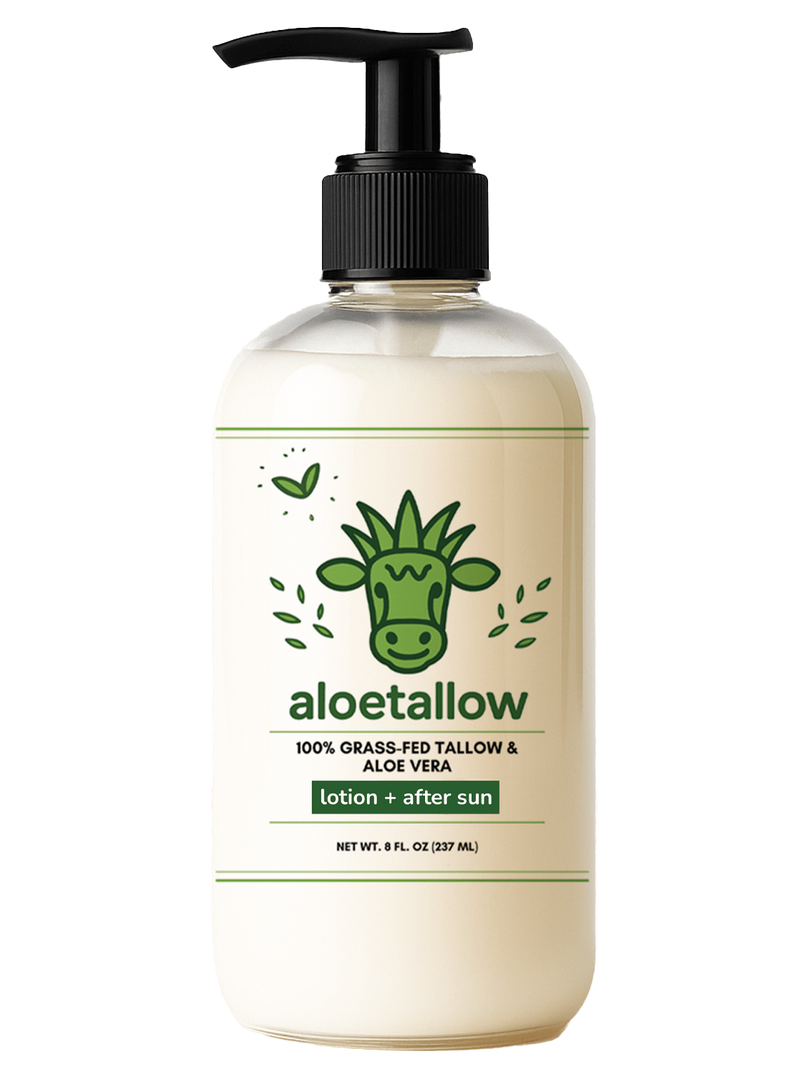
aloetallow is a face and body lotion made with aloe vera juice and grass-fed beef tallow, supplied in an 8 fl oz (237 mL) pump bottle.
- An aloe-based lotion emulsion, rather than an anhydrous tallow balm.
- Also contains coconut oil, shea butter, vegetable glycerin and emulsifying wax NF.
- Contains steam-distilled carrot seed essential oil. Check the ingredient list if you avoid essential oils.
- Preserved with PE 9010: phenoxyethanol and ethylhexylglycerin.
- No added fragrance; the ingredients can have a mild natural scent.
- One Bottle $29.99 USD Available
- Two Pack: Popular $49.99 USD Available
- Best Value Pack $69.99 USD Available
One-time purchase prices shown. Choose your option on the product page.
view product details