What's Actually in Grass-Fed Tallow Skincare?
All eight, including the preservative and why it's there.
★★★★★ 4.9 out of 5 · 197 customer reviews · Daily face + body care

- 8 clean ingredients
- No fillers
- 197 customer reviews
- Made in USA
aloetallow is a water-containing tallow lotion, and its preservative system is PE9010: phenoxyethanol and ethylhexylglycerin. Aloe vera juice, moisturizing fats and glycerin make up the lotion, while emulsifying wax NF blends the water-based and oily ingredients. Here is what those components do.
30-day money-back guarantee

Love love love this lotion. Keeps my skin hydrated through the day. I travel a lot to cities with all different types of weather and it does the job. Took it with me to Puerto Rico and it was on my HIP LOL. Super clean formula and minimal ingredients unlike some of these other lotions.Connie K.✓ Verified buyer

The Short Answer on Preservatives
Aloe vera juice contains water, so an aloe-and-tallow lotion has different preservation needs from a water-free balm. aloetallow uses PE9010 to help protect the formula against microbial contamination. The preservative blend contains phenoxyethanol and ethylhexylglycerin.
A preservative's name alone does not establish how long a finished lotion lasts. Keep the pump clean, store the bottle away from heat and direct sunlight, and follow any storage or date instructions on the packaging.
Every Formula Component Explained
- Aloe vera juice: the first ingredient and the water-based part of the lotion.
- Grass-fed beef tallow: an emollient that softens dry skin.
- Coconut oil: a moisturizing oil in the formula.
- Shea butter: a rich emollient that softens skin.
- Carrot seed oil: a steam-distilled botanical oil. This is an essential oil, not carrot juice or a water-based hydrosol.
- Vegetable glycerin: a humectant, meaning it draws in moisture.
- Emulsifying wax NF: brings the water-based and oily ingredients together into a lotion.
- PE9010: the preservative blend, containing phenoxyethanol and ethylhexylglycerin.
These are the formula components in plain language. PE9010 is a blend rather than a single chemical ingredient. The lotion contains no added fragrance, synthetic dyes or parabens.
How to Compare a Balm and Lotion
Check whether a product contains water-based ingredients, which preservative system it uses, and how the brand says to store it. A water-free balm and an aloe-based lotion are different formats, even if both feature grass-fed tallow.
aloetallow comes in an 8 fl oz pump bottle. You dispense a small amount without scooping from a jar. The ingredients can have a mild natural scent even though no fragrance is added. If a specific ingredient matters to you, contact care@aloe-tallow.com before buying.
Eight ingredients. Every one of them earned it.
Eight formula components, including the PE9010 preservative blend.
Aloe Vera Juice
The first ingredient and the water-based part of the lotion.
Grass-Fed Beef Tallow
Wet-rendered grass-fed tallow, an emollient that helps soften dry skin.
Coconut Oil
A moisturizing oil that contributes to the lotion's texture.
Shea Butter
A rich emollient that helps soften dry skin.
Carrot Seed Oil
A botanical oil from carrot seeds. Part of the formula, even though no fragrance is added.
Vegetable Glycerin
A humectant that draws in moisture.
Emulsifying Wax NF
Blends the water-based and oily ingredients into a lotion.
PE9010
Contains phenoxyethanol and ethylhexylglycerin. Helps protect the water-containing formula.
Each ingredient has a role.
Moisture and softness
Glycerin draws in moisture. Tallow, coconut oil and shea butter are emollients that help soften dry skin. These ingredients play different roles in the same lotion.
Aloe and oils, blended
Aloe vera juice is the first ingredient and contains water. Emulsifying wax NF combines that water-based part with the formula's oils into a spreadable lotion.
A preserved pump lotion
PE9010 helps protect the water-containing formula. The pump dispenses lotion without scooping from a jar. Keep the nozzle clean and store the bottle away from heat and direct sunlight.
Product details at a glance.
| Detail | What it means | aloetallow |
|---|---|---|
| Format | An emulsion | Aloe juice and oils blended into a lotion |
| Bottle size | Per bottle | 8 fl oz (237 mL) |
| Moisturizing ingredients | Emollients | Tallow, coconut oil and shea butter |
| Humectant | Draws in moisture | Vegetable glycerin |
| Added fragrance | None | Ingredients may have a mild natural scent |
| Water-based ingredient | First ingredient | Aloe vera juice |
| Preservative system | PE9010 | Phenoxyethanol and ethylhexylglycerin |
30-day money-back guarantee
What customers actually say.
Sinks in fast, leaves a clean shine.
I love the ingredient transparency. I flipped over the bottle the first time I used it and was like… wow, that’s actually pronounceable! No fillers, no mystery stuff. My girlfriend even started using it because it’s so clean and simple.

I like how the Tallow lotion is moisturizing but not greasy! Also that its made with non-toxic ingredients!
Try it. If it isn't for you, we refund you.
30-day money-back guarantee
Use it for 30 days. If your skin reacts, or you simply don't love it, email us for a full refund.
Ships in 1–2 business days
Tracked, every order. Free shipping on orders over $40.
We reply within 24 hours
Email care@aloe-tallow.com. No return shipment, no restocking fee.
Made with care
Made in the USA in a facility registered under FDA MoCRA. Registration does not mean FDA product approval.

We'll tell you about the preservative.
Grass-fed tallow and aloe vera in a pump lotion for daily face and body care.
Free shipping · 30-day money-back guarantee
Frequently asked questions.
Does grass-fed tallow skincare have synthetic preservatives?
Some tallow products do, depending on their formula. aloetallow contains aloe vera juice and uses PE9010, a synthetic preservative blend. A water-free balm and a water-containing lotion have different preservation needs.
What is PE9010?
PE9010 is a cosmetic preservative blend containing phenoxyethanol and ethylhexylglycerin. It helps protect aloetallow's water-containing formula against microbial contamination.
Is aloetallow free of synthetic ingredients?
No. aloetallow includes a synthetic preservative system, PE9010, and emulsifying wax NF to make the lotion. We explain their functions instead of describing the product as preservative-free or entirely natural. There is no added fragrance, synthetic dye or paraben.
How long does aloetallow last after opening?
Follow any date and storage instructions on your bottle. If you need guidance for your bottle, contact care@aloe-tallow.com with your order details. Store it away from heat and direct sunlight, keep the pump clean and do not add water.
CURRENT PRODUCT DETAILS
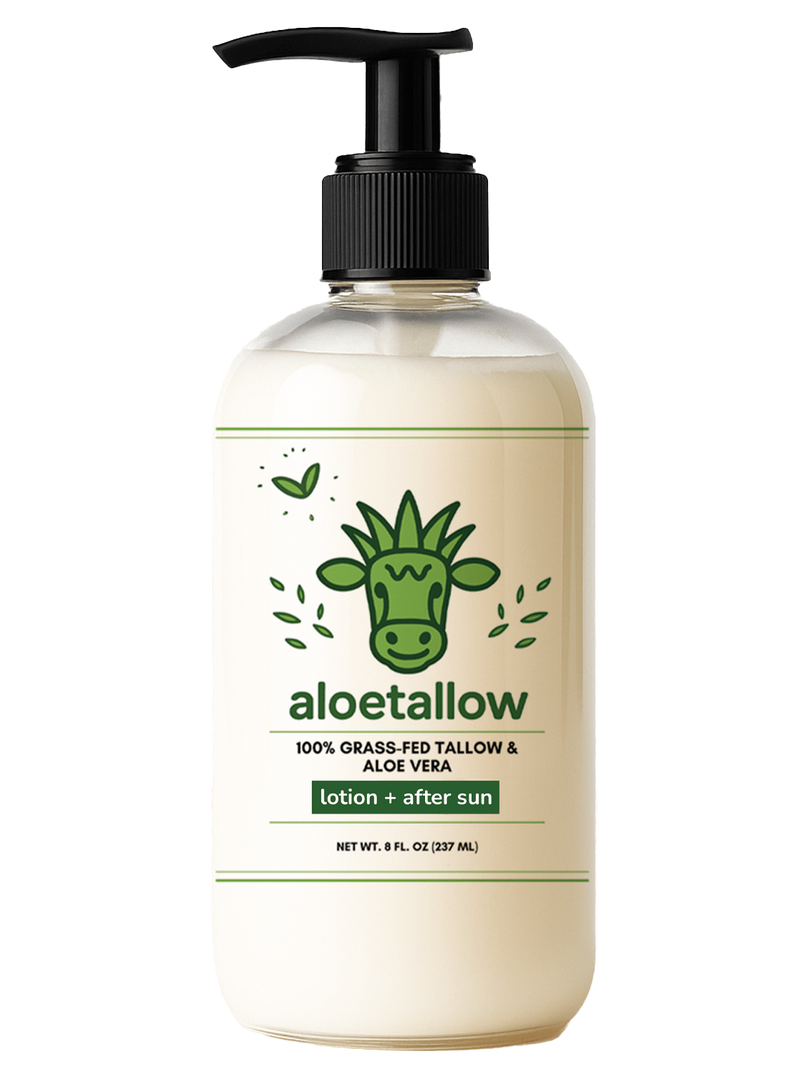
aloetallow is a face and body lotion made with aloe vera juice and grass-fed beef tallow, supplied in an 8 fl oz (237 mL) pump bottle.
- An aloe-based lotion emulsion, rather than an anhydrous tallow balm.
- Also contains coconut oil, shea butter, vegetable glycerin and emulsifying wax NF.
- Contains steam-distilled carrot seed essential oil. Check the ingredient list if you avoid essential oils.
- Preserved with PE 9010: phenoxyethanol and ethylhexylglycerin.
- No added fragrance; the ingredients can have a mild natural scent.
- One Bottle $29.99 USD Available
- Two Pack: Popular $49.99 USD Available
- Best Value Pack $69.99 USD Available
One-time purchase prices shown. Choose your option on the product page.
view product details