Lotion for Acne Prone Skin
Eight ingredients. Nothing added for scent or colour.
★★★★★ 4.9 out of 5 · 197 customer reviews · 2,400+ customers

- 8 clean ingredients
- No fillers
- 197 customer reviews
- Made in USA
A lotion for acne prone skin has to hydrate without adding to the list of things your skin is already reacting to. aloetallow is eight ingredients: grass-fed beef tallow, aloe vera juice, and six more you can read in one breath.
No fragrance, no dyes, no fillers, no synthetic emulsifier stack. It is a moisturizer, not a treatment, and it stays in that lane.
30-day money-back guarantee

I like that it has natural ingredients and the bottle lasts a good amount of time. Not a bunch of unneeded ingredients and never irritates my skin. My skin feels hydrated and normal through out the day especially in dry heat. I highly recommend this product.Jody

Why a Short Ingredient List Matters on Reactive Skin
An acne routine is already crowded. Cleanser, treatment, sometimes a prescription, most of them drying.
Every extra product is another label of ingredients that could be the one your skin objects to. Fragrance is the most common irritant in skincare, and it is in most moisturizers.
aloetallow takes the guesswork out by having almost nothing in it. Eight ingredients, and one gentle preservative used within the regulatory limit.
Ask your dermatologist before adding anything to a prescribed routine.
What Grass-Fed Tallow Brings to Dry, Reactive Skin
Grass-fed beef tallow is built from oleic, stearic, and palmitic acids, the same fats human skin produces.
Because the profile matches, it absorbs rather than sitting on the surface, and it carries vitamins A, D, E and K in with it.
aloetallow pairs it with aloe vera juice, which is where the water comes from. Lipid and water in one step, which is what stripped skin is usually short of.
Patch test on your jawline for three to five days before full use, as you would with anything new.
Eight ingredients. Every one of them earned it.
Most lotions have 22. We chose 8.
Aloe Vera Juice
Aloe vera juice is the first listed component of this aloe-forward lotion.
Grass-Fed Beef Tallow
Wet-rendered grass-fed beef tallow contributes to the lotion's emollient feel.
Coconut Oil
Medium-chain fatty acids with antimicrobial properties. Fast-absorbing, supports barrier function.
Shea Butter
Oleic and stearic acids plus anti-inflammatory triterpenes. Well tolerated by reactive skin.
Carrot Seed Oil
Steam-distilled from Daucus carota seeds. This ingredient is an essential oil.
Vegetable Glycerin
Draws moisture into the barrier and holds it there. Comedogenic rating of 0.
Emulsifying Wax NF
Holds the formula together as a lotion, not a balm. No fragrance, no irritants.
PE 9010 Preservative
PE 9010 combines phenoxyethanol and ethylhexylglycerin to help protect this water-containing lotion from microbial growth.
How the lotion is put together.
Tallow in the oil phase
Grass-fed beef tallow is one of the fats in aloetallow, alongside coconut oil and shea butter. It contributes to the lotion's emollient feel.
aloetallow formula componentsAn aloe-forward lotion
Aloe vera juice is the first listed formula component. The finished lotion combines aloe with oils, fats and glycerin.
aloetallow formula componentsAn emulsified daily moisturizer
Emulsifying wax helps keep the aloe-based and oil-based parts of the lotion mixed. The pump format makes the finished lotion easy to dispense for daily face and body use.
aloetallow lotion formatHow it compares to most lotions.
| Factor | Most lotions | aloetallow |
|---|---|---|
| Ingredient count | ✗ 20–40, most unpronounceable | ✓ 8, all on the front label |
| Fragrance | ✗ Often hidden under “parfum” | ✓ None, ever |
| Parabens | ✗ Common | ✓ Zero |
| Preservative load | ✗ Several, undisclosed levels | ✓ One, named on the label, used within the regulatory limit |
| Industrial seed oils | ✗ Frequently the base | ✓ None |
| Base ingredient | ✗ Water | ✓ Aloe vera juice |
| Absorption | ✗ Sits on top, needs reapplying | ✓ Absorbs in under 60 seconds |
30-day money-back guarantee
What customers actually say.
I’ve struggled with sensitive skin for years and almost every lotion burned or made me break out. This one didn’t. It actually calms my skin instantly, especially after showers. It’s thick but somehow super light once it’s rubbed in - honestly perfect.

I spent years trying lotions for my sensitive skin. Everything burned or clogged my pores. This one actually healed the redness. It’s all I use now.

I have been pleased with the AloeTallow so far. I look forward to seeing how my skin reacts to continued use.
Try it. If it isn't for you, we refund you.
30-day money-back guarantee
Use it for 30 days. If your skin reacts, or you simply don't love it, email us for a full refund.
Ships in 1–2 business days
Tracked, every order. Free shipping on orders over $40.
We reply within 24 hours
Email care@aloe-tallow.com. No return shipment, no restocking fee.
Made with care
Small batch. GMP compliant, FDA MoCRA registered facility. Made in the USA.

Eight ingredients. Nothing to argue with.
8 ingredients. Grass-fed tallow and aloe vera. Nothing you can't pronounce.
Free shipping · 30-day money-back guarantee
Frequently asked questions.
Is this a good lotion for acne prone skin?
It is a fragrance-free moisturizer with eight ingredients and no fillers, which is what most people with reactive, acne prone skin are looking for in a moisturizer. It is not an acne treatment and does not claim to be one.
Will it feel heavy on my face?
No. It absorbs in seconds and leaves no film. Most customers use the same bottle on face and body.
Should I patch test first?
Yes. Apply a small amount to your jawline or inner forearm for 3-5 days before full application. That is standard practice for any new product on reactive skin.
Can I use it alongside my acne treatment?
Many people use a simple moisturizer alongside treatments like retinoids or benzoyl peroxide. Apply your treatment first, let it absorb, then follow with moisturizer. Confirm the combination with your prescribing dermatologist.
Acne is a medical condition requiring professional diagnosis and treatment. aloetallow is designed to support skin comfort, not replace medical advice. Consult your dermatologist before use.
CURRENT PRODUCT DETAILS
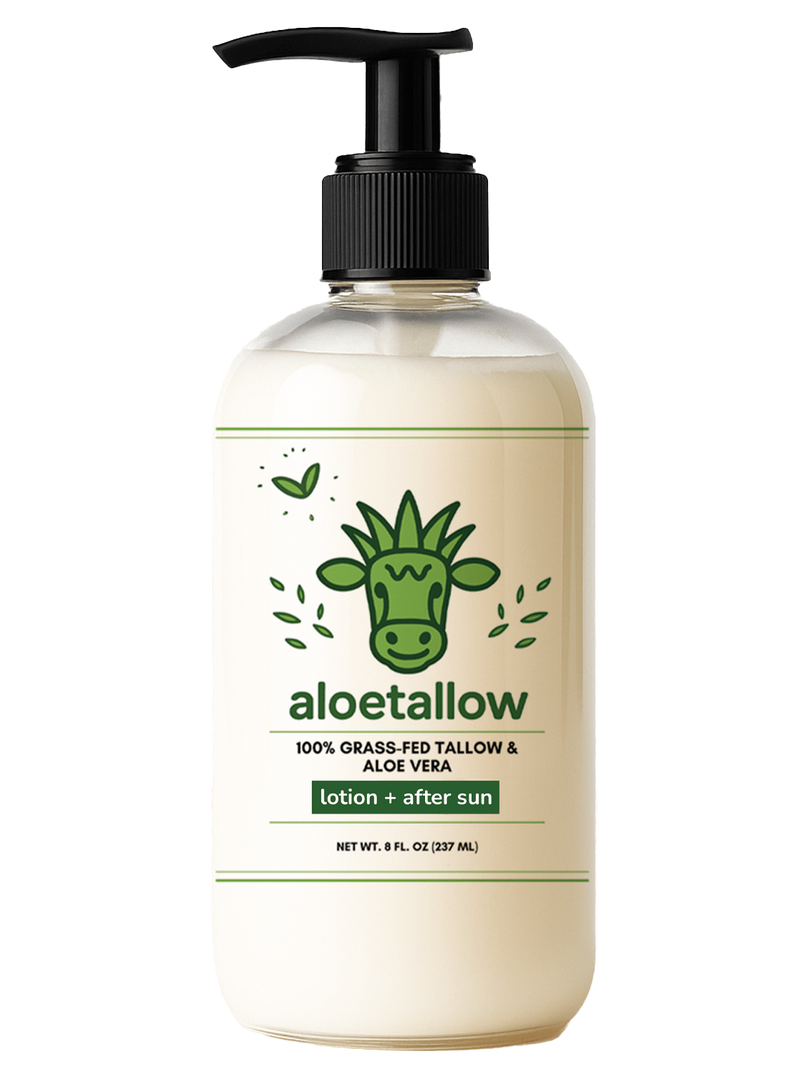
aloetallow is a face and body lotion made with aloe vera juice and grass-fed beef tallow, supplied in an 8 fl oz (237 mL) pump bottle.
- An aloe-based lotion emulsion, rather than an anhydrous tallow balm.
- Also contains coconut oil, shea butter, vegetable glycerin and emulsifying wax NF.
- Contains steam-distilled carrot seed essential oil. Check the ingredient list if you avoid essential oils.
- Preserved with PE 9010: phenoxyethanol and ethylhexylglycerin.
- No added fragrance; the ingredients can have a mild natural scent.
- One Bottle $29.99 USD Available
- Two Pack: Popular $49.99 USD Available
- Best Value Pack $69.99 USD Available
One-time purchase prices shown. Choose your option on the product page.
view product details