Stretch marks are one of the most common skin concerns in the world. Research estimates that 50-90% of pregnant women develop them, and they affect men and women alike during growth spurts, weight changes, and hormonal shifts. Despite that prevalence, most of what the skincare industry sells for stretch marks doesn't address what they actually are -- and that disconnect is why so many products underdeliver.
Stretch marks aren't a surface problem. They're structural. They happen deep in the dermis, where collagen and elastin fibers tear under mechanical stress. That means any approach worth considering needs to address dermal integrity, not just surface hydration. Beef tallow -- specifically grass-fed tallow with its full complement of fat-soluble vitamins and fatty acids -- provides several of the raw materials your skin uses to maintain elasticity and support collagen. It won't erase existing stretch marks (nothing topical reliably does). But the science behind its nutrient profile and how those nutrients interact with skin's structural proteins is worth understanding, especially if prevention is the goal.
What stretch marks actually are
A stretch mark (striae distensae) is a type of dermal scar. It forms when the dermis -- the thick middle layer of skin that contains collagen, elastin, and fibrillin networks -- stretches faster than it can remodel. The collagen and elastin fibers fracture under the mechanical stress, and the body repairs the damage with scar tissue that has a different structure and appearance than the original skin.
A 2017 review in the Journal of the European Academy of Dermatology and Venereology described the pathophysiology: stretch marks begin as striae rubrae (red or purple marks) when the initial tearing creates inflammation and increased blood flow. Over time, they mature into striae albae (white or silver marks) as the inflammation resolves and the scar tissue loses its vascularity. The structural damage is the same in both stages -- the visual difference reflects the inflammatory timeline.
The key factors that determine whether stretch marks form under mechanical stress are:
- Collagen density and organization. Skin with well-organized, densely packed collagen fibers resists tearing better than skin with sparse or disorganized collagen.
- Elastin integrity. Elastin fibers give skin its recoil -- the ability to stretch and snap back. When elastin is degraded or insufficient, skin stretches but doesn't recover, and the collagen network bears more stress than it can handle.
- Hydration of the dermis. Well-hydrated dermal tissue is more pliable. Dehydrated tissue is stiffer and more prone to tearing under the same amount of force. A 2015 study in the Journal of Mechanical Behavior of Biomedical Materials demonstrated that skin hydration significantly affects its mechanical properties -- specifically, its ability to deform without structural failure.
- Hormonal environment. Cortisol (elevated during pregnancy, rapid weight gain, and stress) directly inhibits fibroblast activity -- the cells responsible for producing collagen and elastin. A 2013 study in Endocrine Reviews confirmed that glucocorticoids reduce collagen synthesis and accelerate collagen degradation. This is why stretch marks are more common during periods of hormonal change, not just physical stretching.
Understanding this mechanism matters because it reveals what a topical product can and cannot do. No cream or lotion can reach deep enough to repair fractured collagen fibers in the mid-dermis. But topical products can influence the factors that determine whether those fibers fracture in the first place: hydration, nutrient delivery to the epidermis and upper dermis, and support for the biological processes that maintain elastin and collagen.
The vitamins in tallow that support collagen and elastin
Grass-fed beef tallow is one of the richest natural sources of fat-soluble vitamins A, E, and K -- all of which have documented roles in skin's structural maintenance. These vitamins are concentrated in the adipose tissue of grass-fed cattle and survive the low-temperature rendering process that produces high-quality tallow.
Vitamin A (retinol precursors). Vitamin A is the most extensively studied nutrient for collagen support in skin. A 2007 study in the Archives of Dermatology found that topical retinol (a form of vitamin A) significantly increased collagen production in photodamaged skin, with measurable increases in procollagen type I -- the precursor molecule that fibroblasts assemble into mature collagen fibers. Vitamin A also regulates keratinocyte differentiation and promotes healthy cell turnover, which supports the structural integrity of the epidermis overlying the dermis where stretch marks form.
Grass-fed tallow contains beta-carotene (a vitamin A precursor) at significantly higher levels than grain-fed tallow. A 2009 study in the Journal of Animal Science documented the difference. While the concentration isn't comparable to a prescription retinoid, it provides a consistent low-dose delivery of a compound that skin tissue actively converts and uses.
Vitamin E (alpha-tocopherol). Vitamin E is the primary lipid-soluble antioxidant in skin. A 2005 review in Molecular Aspects of Medicine documented its role in protecting cell membranes and the lipid-rich structures of the dermis from oxidative damage. This matters for stretch marks because oxidative stress degrades collagen and elastin fibers -- accelerating the structural weakening that makes skin vulnerable to tearing.
Vitamin E also has a specific interaction with collagen synthesis. A 2016 study in the Journal of Molecular Medicine found that alpha-tocopherol supported fibroblast proliferation and collagen production in cell culture models. It doesn't create collagen on its own, but it protects the fibroblasts that do and supports their activity.
Vitamin K. Less discussed than A and E, but relevant to stretch mark prevention. Vitamin K supports skin's microcirculation -- the small blood vessels that deliver nutrients and oxygen to the dermis. Adequate microcirculation ensures that fibroblasts receive the raw materials they need to produce and maintain collagen. A 2004 study in the Journal of the American Academy of Dermatology found that topical vitamin K improved the resolution of vascular skin conditions, suggesting it actively supports dermal blood flow.
For a broader look at how these fat-soluble vitamins and other moisturizer ingredients interact with skin biology, see the post on best natural moisturizer ingredients.
Fatty acids and skin elasticity
Beyond vitamins, tallow's fatty acid profile directly supports the mechanical properties of skin that prevent stretch marks.
Palmitoleic acid. This omega-7 monounsaturated fatty acid is present in tallow at low but meaningful concentrations. Palmitoleic acid has been studied for its role in skin regeneration -- a 2012 study in the International Journal of Molecular Sciences found that palmitoleic acid promoted wound healing and supported re-epithelialization in skin models. For stretch marks, its relevance is in supporting the skin's ongoing repair and remodeling processes. Skin that efficiently repairs micro-damage is more resilient to the larger-scale tearing that produces stretch marks.
Oleic acid (~47% of tallow). The dominant fatty acid in tallow. Oleic acid serves two functions relevant to elasticity. First, it's an emollient that integrates into the lipid matrix of the stratum corneum, improving the skin's flexibility and reducing stiffness. Stiff skin is more prone to dermal tearing. Second, oleic acid enhances the penetration of other compounds -- meaning the vitamins A, E, and K in tallow are carried deeper into the skin rather than sitting on the surface.
Palmitic and stearic acids. These saturated fatty acids are structural components of the skin barrier. They reinforce the lamellar lipid structures that maintain barrier integrity and reduce transepidermal water loss. Their role in stretch mark prevention is indirect but important: a strong, well-maintained barrier retains more water in the dermis, and hydrated dermis is more mechanically resilient.
Conjugated linoleic acid (CLA). Grass-fed tallow contains 2-3x more CLA than grain-fed. CLA has documented anti-inflammatory properties -- a 2003 study in the Journal of Investigative Dermatology found it reduced inflammatory markers in skin models. Chronic low-grade inflammation degrades collagen over time (a process called inflammaging). By modulating inflammation, CLA may help preserve the collagen network that stretch marks represent a failure of.
Prevention versus treatment: an honest assessment
This is where intellectual honesty matters more than marketing.
Prevention. The evidence for keeping skin well-hydrated, well-nourished, and elastic as a strategy for reducing stretch mark formation is solid. A 2015 Cochrane review examined topical preparations for preventing stretch marks during pregnancy and found that while no single product eliminated them entirely, consistent moisturization and hydration maintenance were associated with reduced severity. The mechanism makes sense: skin that is supple, hydrated, and receiving the nutrients it needs for collagen maintenance is better equipped to handle mechanical stress without structural failure.
Tallow fits this prevention framework well. It delivers fat-soluble vitamins that support collagen synthesis. Its fatty acids maintain barrier integrity and dermal hydration. Its occlusive properties reduce water loss. And its compositional similarity to human sebum means skin integrates it efficiently rather than treating it as a foreign substance.
Treatment of existing marks. This is where expectations need to be managed carefully. Mature stretch marks (striae albae) represent completed scar tissue. The collagen in these areas has already been reorganized into scar architecture, and no topical product has been shown to reliably reverse that process. Newer stretch marks (striae rubrae) are more responsive to intervention because the remodeling process is still active -- the tissue is still inflamed and the scar hasn't fully matured.
What tallow can do for existing stretch marks is support the skin around and over them. Keeping the area well-hydrated and nourished may improve the skin's overall appearance, may support ongoing (slow) remodeling of newer marks, and can improve the texture and comfort of skin that has existing striae. But claiming that any topical product "removes" or "erases" stretch marks is not supported by the research. Be skeptical of any product that makes that claim.
How to apply tallow for stretch mark prevention
If you're pregnant, postpartum, gaining muscle mass, or going through any period of rapid body change, here's how to use tallow effectively for skin elasticity support.
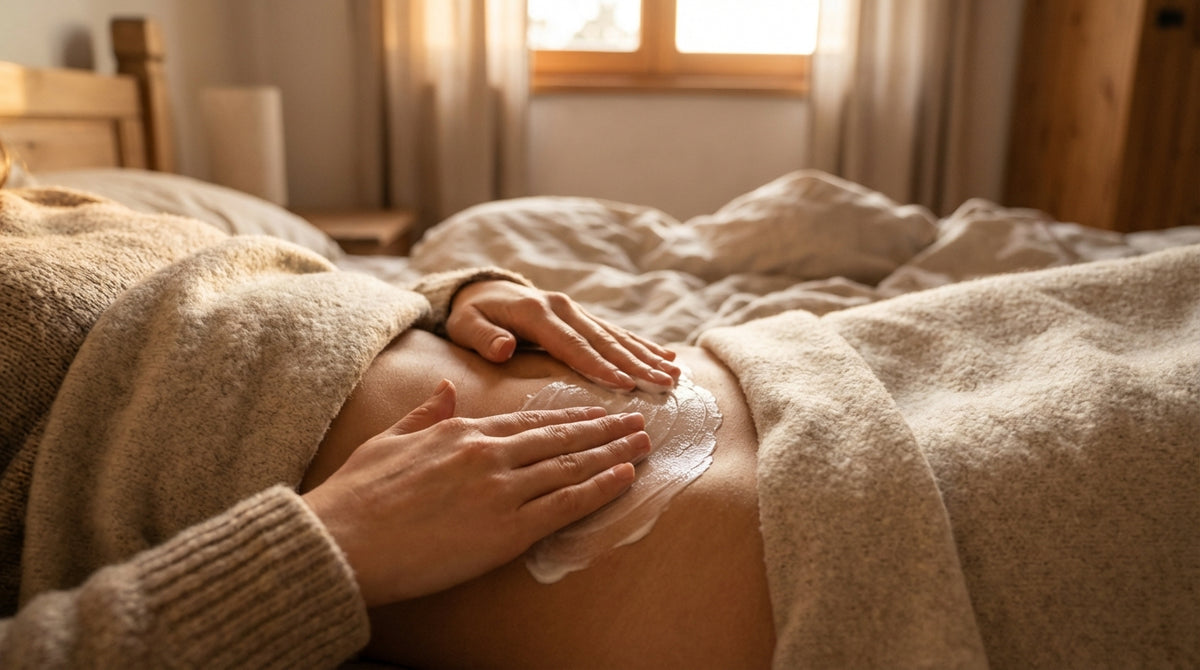
Timing. Apply after every shower or bath, while skin is still damp. The soak-and-seal method maximizes hydration retention in the dermis. During pregnancy, this typically means once or twice daily.
Target areas. Focus on the areas most prone to stretch marks: abdomen (especially below the navel), hips, outer thighs, breasts, and lower back. These areas experience the most mechanical stress during pregnancy and rapid weight change.
Technique. Use gentle, circular motions. Don't pull or drag the skin. The goal is to distribute an even, thin layer across the entire area. Warm the product between your palms first for better spreadability.
Amount. Enough to create a thin film that absorbs within 10-15 minutes. If the skin still feels tacky or oily after 15 minutes, you've used too much. Over the abdomen during late pregnancy, this is usually about a nickel-sized amount.
Consistency. This is the most important variable. Occasional use doesn't provide the sustained hydration and nutrient delivery that supports elasticity maintenance. Daily application, ideally twice daily, maintains the baseline hydration and vitamin delivery that gives skin the best chance of handling mechanical stress without tearing.
Start early. If you're pregnant, begin consistent moisturization early -- ideally in the first trimester, before significant abdominal expansion begins. The goal is to build up the skin's hydration and nutrient reserves before they're tested by rapid stretching.
For a detailed guide on tallow application technique, timing, and layering, see the post on beef tallow for skin.
What to look for in a tallow product for stretch marks
Not all tallow products are equally suited for this purpose. Here's what matters.
Grass-fed sourcing. The vitamin and CLA advantages that make tallow relevant to collagen support are specific to grass-fed, grass-finished tallow. Commodity tallow has lower concentrations of vitamins A, E, and K, less CLA, and a less favorable omega-6 to omega-3 ratio. If you're using tallow specifically for its nutrient profile, the sourcing determines whether you're getting those nutrients.
Aloe vera as a companion ingredient. Aloe vera contains acemannan and other polysaccharides that have been studied for their role in collagen synthesis. A 2009 study in the Annals of Dermatology found that aloe vera gel increased collagen content and altered collagen composition in wound models, shifting toward more type III collagen (the type present in early wound healing and skin remodeling). A tallow product formulated with aloe vera provides both the lipid-soluble nutrients from tallow and the water-soluble compounds from aloe that support collagen processes.
Minimal ingredient list. During pregnancy especially, fewer ingredients means fewer potential irritants and fewer unknowns. Products with long ingredient lists introduce synthetic fragrances, preservatives, and emulsifiers that may trigger sensitivity in hormonally reactive skin. A short, transparent ingredient list lets you know exactly what's going on your skin.
No fragrance. Pregnancy often comes with heightened scent sensitivity. A fragrance-free tallow product avoids triggering nausea and eliminates synthetic fragrance chemicals that have come under scrutiny for endocrine activity. Properly rendered grass-fed tallow has virtually no scent on its own.
Frequently asked questions
Can beef tallow remove existing stretch marks?
No topical product has been shown to reliably remove mature stretch marks (striae albae). These represent completed scar tissue in the dermis. What tallow can do is support the skin's hydration, deliver vitamins that support ongoing collagen processes, and improve the overall texture and appearance of the skin around and over stretch marks. Newer, reddish stretch marks (striae rubrae) are more responsive to intervention because the remodeling process is still active. Keeping them well-hydrated and nourished during this phase may support a better healing outcome.
Is beef tallow safe to use during pregnancy?
Beef tallow is a rendered animal fat with a long history of topical use. It doesn't contain retinoids at prescription-level concentrations (which are contraindicated during pregnancy) -- the vitamin A present is in the form of beta-carotene at naturally occurring levels, well below therapeutic retinoid doses. As with any product during pregnancy, consult your healthcare provider if you have specific concerns. But tallow's simple composition -- fat, vitamins, and fatty acids -- makes it one of the least complicated options for pregnancy skincare.
How soon should I start using tallow during pregnancy to prevent stretch marks?
The earlier the better. First trimester is ideal. The goal is to establish consistent hydration and nutrient delivery to the skin before the rapid abdominal expansion of the second and third trimesters. Starting early gives your skin the best chance of maintaining elasticity during the period of greatest mechanical stress. That said, starting at any point is better than not starting at all -- the hydration and nutrient benefits begin with the first application.
Does tallow work better than cocoa butter or shea butter for stretch marks?
Each has a different nutrient profile. Cocoa butter is primarily an occlusive with a high stearic acid content but limited vitamin delivery. Shea butter contains some vitamins A and E but in lower concentrations than grass-fed tallow. Tallow's advantage is its combination of structural fatty acids, fat-soluble vitamins (A, E, K), CLA, and its compositional similarity to human sebum -- which means skin integrates it efficiently. No head-to-head clinical trials compare them specifically for stretch marks, but tallow's broader nutrient profile gives it a theoretical edge for the collagen and elasticity support that stretch mark prevention requires.
Where can I find a tallow-based product suitable for stretch mark prevention?
Aloetallow is formulated with 100% grass-fed beef tallow and aloe vera -- 8 total ingredients, no fragrance, no seed oils, no synthetic additives. The aloe vera base adds collagen-supporting polysaccharides alongside tallow's fat-soluble vitamins and fatty acids. It's pregnancy-friendly, fragrance-free, and designed to deliver the nutrient profile that the research connects to skin elasticity and hydration maintenance.

8 ingredients. Grass-fed tallow + aloe vera. Nothing you can't pronounce.
Stretch marks are a structural reality of skin under stress. No product can guarantee prevention, and no honest product claims to erase them. But the science is clear that skin's ability to withstand mechanical stretching depends on collagen integrity, elastin function, and hydration -- all processes that require specific nutrients to maintain. Beef tallow delivers several of those nutrients in a form that skin recognizes and uses efficiently. Consistent application, especially during periods of rapid body change, gives your skin the raw materials it needs to stay as resilient as possible.