Tallow has earned its way back into the skincare conversation. The fatty acid profile, the sebum similarity, the barrier repair evidence -- it all checks out, and more people are paying attention. But there's a question that almost nobody is asking, and it matters more than whether tallow works at all: where did the tallow come from?
A 2024 peer-reviewed study published in Cureus (Pham et al., PMC11193910) confirmed that grass-fed beef tallow shares the primary fatty acid composition of human sebum, supporting its biocompatibility with skin.
Not all beef fat is created equal. The animal's diet fundamentally changes the composition of its fat -- the vitamin content, the fatty acid ratios, the concentration of bioactive compounds like conjugated linoleic acid. A tallow product made from commodity feedlot beef and one made from 100% grass-fed beef may look identical on the label, but the molecular profiles are meaningfully different. If you're putting tallow on your skin because of the science behind it, the sourcing is what determines whether you're actually getting what the science describes.
What the science says about grass-fed vs. grain-fed fat
The nutritional differences between grass-fed and grain-fed beef have been studied extensively in food science. Those same differences apply directly to the rendered fat used in skincare, because the fat is where many of these compounds concentrate.
A 2010 comprehensive review in the Nutrition Journal examined the nutritional composition of grass-fed versus grain-fed beef across multiple studies. The findings were consistent: grass-fed beef contained significantly higher concentrations of several compounds that are directly relevant to skin biology.
Conjugated linoleic acid (CLA). Grass-fed beef fat contains 2-3x more CLA than grain-fed beef fat. A 2006 study in the Journal of Animal Science measured CLA concentrations across feeding regimens and found that cattle finished entirely on pasture had CLA levels averaging 0.64% of total fatty acids, compared to 0.26% in grain-finished cattle. CLA has documented anti-inflammatory properties in topical applications -- a 2003 study in the Journal of Investigative Dermatology found that topical CLA reduced inflammatory markers in skin models. For skin that tends toward redness, irritation, or reactivity, that 2-3x difference isn't trivial.
Omega-6 to omega-3 ratio. Grain-fed beef fat has an omega-6 to omega-3 ratio that typically ranges from 6:1 to over 10:1. Grass-fed beef fat is closer to 2:1 or 3:1. This matters because omega-6 fatty acids, when disproportionately high, promote a pro-inflammatory lipid environment on the skin. A 2002 review in Biomedicine & Pharmacotherapy documented how excessive omega-6 relative to omega-3 drives the production of pro-inflammatory eicosanoids. When you apply a fat topically, you're introducing that ratio directly to your skin's lipid environment.
Fat-soluble vitamins. Grass-fed beef fat is richer in vitamins A, E, D, and K -- all fat-soluble, all concentrated in the adipose tissue. A 2009 study in the Journal of Animal Science found grass-fed beef had significantly higher beta-carotene (a vitamin A precursor) and alpha-tocopherol (vitamin E) levels. Vitamin A supports cell turnover. Vitamin E is a lipid-soluble antioxidant that protects cell membranes from oxidative damage. Vitamin K supports skin's microcirculation. Vitamin D plays a role in barrier function and antimicrobial peptide production. These aren't trace differences -- they're measurable, and they accumulate in the rendered fat.
For a deeper look at how tallow's fatty acid profile compares to human sebum and why that structural similarity matters, the post on what is tallow skincare covers the foundational science.
Why commodity tallow falls short
Most commercially available tallow -- the kind used in industrial soap, candles, and lower-cost skincare -- comes from conventional feedlot cattle. These animals spend the final 4-6 months of their lives eating a grain-based diet (primarily corn and soy) designed to maximize weight gain as quickly as possible. That diet changes the composition of their fat tissue in documented ways.
Feedlot cattle accumulate more omega-6 fatty acids in their adipose tissue because grain is high in linoleic acid (an omega-6). Their fat stores less CLA because CLA is primarily produced by rumen bacteria that thrive on grass -- when you shift the diet to grain, CLA production drops. Their fat contains fewer fat-soluble vitamins because those vitamins come from the green forage that grain-finished cattle no longer eat in meaningful quantities during the finishing period.
The rendering process itself doesn't create these differences -- it preserves whatever was in the fat to begin with. If the starting material is nutritionally depleted, the rendered tallow will be too. You can render commodity tallow perfectly and still end up with a product that has half the CLA, a fraction of the vitamin content, and an inflammatory omega ratio. The rendering technique matters for purity and texture. The animal's diet determines the nutritional payload.
There's also a processing concern. Commodity tallow is more likely to come from mixed sources -- rendered from trimmings aggregated across multiple facilities, sometimes from multiple countries. Traceability is poor. Grass-fed tallow sourced from trusted suppliers has better traceability: you can verify what the animals ate, where they were raised, and how the fat was processed. That transparency isn't a marketing story. It's a quality control variable that affects what ends up in the product.
The post on beef tallow for skin covers the broader question of how tallow functions on skin -- the sourcing question here is about making sure the tallow you're using actually delivers on that function.
What grass-fed tallow actually delivers to your skin
When you apply grass-fed tallow topically, you're delivering a specific set of compounds directly to the stratum corneum and the lipid matrix of the skin barrier. Here's what you're working with and why each component matters.
Palmitic acid (~26%). One of the dominant fatty acids in both tallow and human sebum. Palmitic acid is a key structural component of the skin's lamellar bodies -- the lipid structures that form the barrier's waterproofing system. A 2003 study in the Journal of Lipid Research demonstrated that palmitic acid is essential for normal lamellar body formation. Without adequate palmitic acid, the barrier develops structural gaps that increase transepidermal water loss.
Oleic acid (~47%). The primary monounsaturated fatty acid in tallow. Oleic acid enhances penetration of other compounds into the stratum corneum, which means the vitamins and CLA present in grass-fed tallow are carried deeper into the skin rather than sitting inertly on the surface. It also has documented emollient properties -- it softens and smooths skin by filling in spaces between corneocytes (the dead skin cells that form the outermost layer).
Stearic acid (~14%). A saturated fatty acid that functions as a structural lipid in the barrier. Stearic acid is one of the three lipids (along with ceramides and cholesterol) that make up the mortar between corneocytes. It reinforces the barrier's physical integrity and contributes to the occlusive effect that reduces water loss.
CLA (2-3x higher in grass-fed). Beyond its anti-inflammatory properties, CLA has been studied for its effects on skin cell proliferation and differentiation. A 2005 study in Prostaglandins, Leukotrienes and Essential Fatty Acids found that CLA influenced keratinocyte differentiation in cell models -- suggesting it may support normal skin cell turnover when applied topically.
Vitamin E (alpha-tocopherol). Protects the lipid barrier from oxidative degradation. UV exposure, pollution, and environmental stress all generate free radicals that break down the unsaturated fatty acids in your barrier. Vitamin E, concentrated in grass-fed tallow, neutralizes those radicals at the site where damage occurs. A 2005 review in Molecular Aspects of Medicine documented alpha-tocopherol as the primary lipid-soluble antioxidant in skin tissue.
Vitamin A (retinol precursors). Supports keratinocyte turnover and epidermal renewal. The beta-carotene present in grass-fed tallow at higher concentrations than grain-fed is converted to retinol in skin tissue. This isn't the concentrated retinol of a prescription product, but it's a steady low-dose delivery of a compound your skin uses for normal renewal processes.
How to evaluate a tallow product's sourcing
If you're shopping for a tallow-based moisturizer, here's what to look for -- and what to be skeptical of.
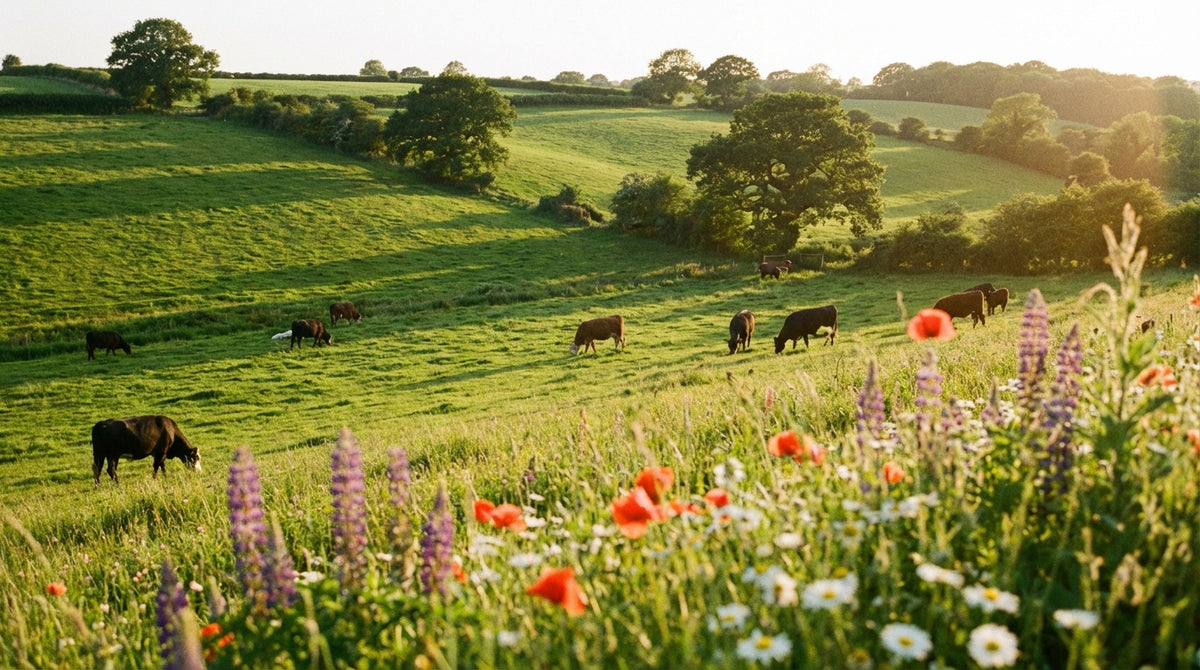
- Look for "100% grass-fed" or "grass-fed and grass-finished." "Grass-fed" alone doesn't guarantee the animal wasn't grain-finished. Many cattle eat grass for the first part of their lives and then move to a feedlot for the final finishing period. The finishing diet significantly affects fat composition. "Grass-fed and grass-finished" means the animal ate forage its entire life.
- Ask about single-source vs. aggregated. Tallow from a single farm or co-op has traceable sourcing. Tallow from a commodity renderer is aggregated from unknown origins. Single-source doesn't automatically mean higher quality, but it means the supplier can actually tell you what's in the fat.
- Check the rendering method. Wet-rendering (slow, low-heat) preserves more vitamins and CLA than high-temperature industrial rendering. High heat degrades fat-soluble vitamins and can oxidize the unsaturated fatty acids. If the brand doesn't mention their rendering process, that's worth asking about.
- Be skeptical of "tallow" in a long ingredient list. If a product lists tallow as one ingredient among 20-30 others, the concentration may be low enough that the sourcing quality doesn't functionally matter. The benefits of grass-fed tallow show up when it's a primary ingredient, not a minor additive.
- Check the country of origin. Grass-fed standards vary by country. The United States, New Zealand, and Australia have well-documented grass-fed cattle operations. "Grass-fed" on a product with no country of origin disclosed is a flag.
The Aloetallow formula
Aloetallow uses 100% grass-fed beef tallow as its primary lipid. The tallow is wet-rendered at low temperature to preserve the full vitamin and CLA content. Here's every ingredient in the bottle:

8 ingredients. Grass-fed tallow + aloe vera. Nothing you can't pronounce.
- Grass-fed beef tallow -- the lipid foundation, packed with oleic, palmitic, and stearic acids plus vitamins A, D, E, K and CLA
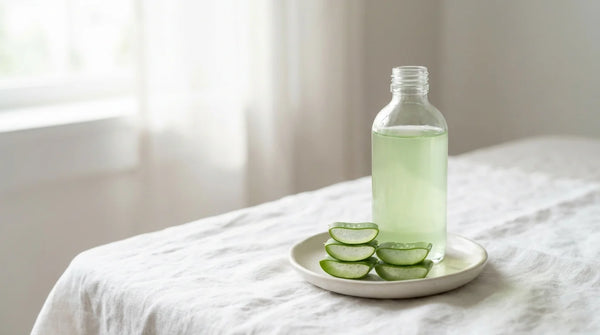
- Aloe vera -- cools, hydrates, and stimulates the skin's own hyaluronan production
- Coconut oil -- softens and restores the barrier with antimicrobial lauric acid
- Shea butter -- complementary fatty acids for deep, lasting moisture
- Carrot seed oil -- beta-carotene supports skin tone and post-UV recovery
- Glycerin -- proven humectant for sustained hydration
- Emulsifying wax (2%) -- binds the formula into a stable, lightweight lotion
- PE9010 (1%) -- paraben-free preservative, gentle on sensitive skin
Eight ingredients. No fragrance, no fillers, no seed oils. It delivers the nutrient-dense fat profile that the grass-fed research describes, not a diluted version of it.
Frequently asked questions
Does grass-fed tallow smell different than regular tallow?
Raw grass-fed tallow that's been properly rendered should have a very mild, neutral scent -- slightly earthy but not gamey or unpleasant. Poorly rendered tallow of any sourcing quality can smell strong. If a tallow product has a noticeable beefy odor, that's more likely a rendering quality issue than a sourcing issue. Well-made grass-fed tallow products should have little to no detectable scent.
Is there a meaningful difference in texture between grass-fed and commodity tallow?
Grass-fed tallow tends to be slightly softer at room temperature due to its higher proportion of unsaturated fatty acids (particularly oleic acid). Grain-fed tallow can be harder and waxier. In a finished product, this difference is usually managed by the formulation -- but in raw tallow, you can feel it. The softer texture of grass-fed also means slightly faster absorption when applied to skin.
Can I tell from a label whether tallow is truly grass-fed?
Not with certainty from the label alone. "Grass-fed" is not a regulated term in cosmetics the way it is (loosely) in food labeling. Your best indicators are: the brand specifies "grass-fed and grass-finished," the brand identifies the source farm or region, and the brand describes their rendering process. If none of those details are available, the grass-fed claim is unverifiable.
How much CLA is actually in a tallow moisturizer?
CLA in grass-fed beef fat averages around 0.5-0.7% of total fatty acids, compared to 0.2-0.3% in grain-fed. In a product where tallow is the primary ingredient, that translates to a meaningful topical dose -- enough for the anti-inflammatory effects documented in dermatological research. It's not a concentrated supplement-level dose, but it's a consistent low-level delivery every time you apply.
Is grass-fed tallow worth the higher cost?
That depends on what you're using it for. If you're applying tallow to your skin specifically because of the vitamin content, the CLA, and the favorable omega ratio -- the properties that the research supports -- then yes, the sourcing is what determines whether you're actually getting those things. Commodity tallow will still provide occlusion and some fatty acid delivery. Grass-fed tallow delivers 2-3x more of the bioactive compounds that make the skincare case for tallow compelling in the first place.
The tallow renaissance in skincare is real, and the science behind it is solid. But the science was conducted on grass-fed animal fats with specific nutritional profiles -- not on commodity rendered fat from feedlot cattle. Sourcing isn't a premium marketing angle. It's the variable that determines whether the product you're using actually matches what the research describes. If you're going to use tallow on your skin, the animal's diet is the first question worth asking.
Sources
- Pham, et al. (2024). Tallow, Rendered Animal Fat, and Its Biocompatibility With Skin. Cureus. PMC11193910