You did the research. You read the ingredient lists, learned about fatty acid profiles, maybe watched a few videos about why your grandmother's skincare was simpler and probably better. You bought a tallow-based moisturizer. And now it's sitting on your bathroom counter while you wonder: do I just... put it on?
That gap between buying tallow and knowing how to actually build a routine around it is where most people stall. Tallow isn't a drop-in replacement for the lotion you've been using. It works through a different mechanism, absorbs differently, and layers with other products differently. The good news: once you understand those differences, the routine is simpler than what you had before. Not more complicated -- less.
Why tallow needs a different approach
Most conventional lotions are water-based emulsions. They feel light because they're mostly water, humectants like glycerin, and emulsifiers that hold the formula together. When you apply them, the water evaporates, the humectants pull moisture from the air (or from deeper skin layers), and whatever occlusive agents are in the formula try to seal things in.
Tallow works from the lipid side. Its fatty acid profile -- roughly 50% saturated fats (palmitic and stearic acid), 40% monounsaturated (oleic acid), and smaller amounts of fat-soluble vitamins A, D, E, and K -- closely mirrors human sebum. A 2012 study in the International Journal of Molecular Sciences confirmed that this structural similarity allows tallow-derived lipids to integrate into the stratum corneum rather than sitting on top of it.
What this means practically: tallow is an emollient and occlusive, not a humectant. It doesn't add water to your skin. It fills gaps in your lipid barrier, softens the outer layer, and locks in whatever moisture is already there. That single fact changes how you should apply it, when you should apply it, and what you pair it with.
If you want the full science on how tallow interacts with your skin barrier, what is tallow skincare covers the mechanism in detail.
The morning routine: protect and prime
Your morning routine has one job: prepare your skin for the day. UV exposure, pollution, wind, temperature swings, air conditioning. Your barrier takes hits all day long. A good morning routine builds a protective lipid layer that reduces transepidermal water loss (TEWL) and gives your skin a foundation of fat-soluble antioxidants.
Here's the step-by-step:
- Cleanse gently. Splash with lukewarm water or use a mild, non-stripping cleanser. You don't need to deep-clean in the morning -- your skin wasn't exposed to pollution overnight. The goal is removing any excess sebum or product residue from the night before without stripping your lipid barrier.
- Apply any water-based serums first. If you use vitamin C serum, niacinamide, or hyaluronic acid, apply those now while skin is still slightly damp. These are thin, water-based products that need to go on before any lipid layer.
- Apply tallow moisturizer to damp skin. A pea-sized amount for your face. Warm it between your fingertips for a few seconds -- this brings it closer to skin temperature and improves spreadability. Press gently into skin rather than rubbing. Work from the center of your face outward. For your body, use about a nickel-sized amount per section (each arm, each leg, torso).
- Wait 5-10 minutes, then apply sunscreen. Let the tallow absorb fully before layering sunscreen on top. This is non-negotiable if you're going outside. Tallow contains vitamins A and E which offer some antioxidant protection, but it is not sun protection. Always use a dedicated SPF product as your final step.
The morning layer should be thin. You want it absorbed within 10 minutes -- no visible residue, no greasy feel. If it's still sitting on the surface after 10 minutes, you used too much. Scale back to half the amount next time.
The evening routine: repair and restore
Night is when your skin does its heaviest repair work. Cell turnover peaks during sleep. A 2019 review in the International Journal of Molecular Sciences confirmed that transepidermal water loss increases overnight and barrier recovery is most active between 11pm and 4am. Your evening routine should support that process by delivering lipids and locking in hydration during the repair window.
- Cleanse thoroughly. This is the deep clean. Remove sunscreen, pollution, makeup, and accumulated sebum from the day. A gentle oil-based or cream cleanser works well -- it dissolves lipid-soluble debris without stripping your barrier the way foaming cleansers can.
- Apply any treatment products. If you use retinol, AHAs, BHAs, or prescription treatments, apply them now on clean, dry skin. Wait 10-15 minutes for them to absorb before the next step. These active ingredients need direct contact with skin to work properly.
- Apply tallow moisturizer as the occlusive seal. This is where the soak-and-seal principle applies. Pat your face damp with a mist or damp cloth (you don't need to shower again), then apply your tallow. You can use a slightly more generous amount at night than in the morning -- there's no sunscreen to layer over it, no makeup, no concern about sheen. The tallow acts as a final occlusive layer that traps moisture and treatment ingredients against your skin all night.
For your body, the evening routine is simpler: shower, pat damp (not dry), apply tallow within 2-3 minutes. This is the soak-and-seal method, and a 2009 study in the Journal of Allergy and Clinical Immunology showed it significantly improves barrier function compared to delayed application. Eight hours of occlusive contact with hydrated skin is the ideal repair scenario.
For a deeper guide on application technique -- how much to use, face versus body, warming the product -- how to use beef tallow on skin covers the mechanics in detail.
The after-sun routine: where aloe and tallow shine together
This is the routine most people don't think about until they need it -- and by then, they're reaching for whatever's in the medicine cabinet. Sun-exposed skin has a specific set of needs that a standard morning or evening routine doesn't fully address.
UV exposure triggers an inflammatory cascade. Your skin responds with vasodilation (the redness), increased TEWL (the tightness), and oxidative stress from free radical production. A 2013 study in Photochemical and Photobiological Sciences found that UV-B radiation depletes antioxidant reserves in the epidermis within hours of exposure. Your skin needs three things in sequence: cool, hydrate, seal.
- Cool the skin. Lukewarm shower or cool damp cloth on affected areas. Not ice -- extreme cold constricts blood vessels and can slow the healing process. The goal is bringing surface temperature down gently.
- Apply aloe vera while skin is still damp. Aloe delivers acemannan, a polysaccharide that research shows supports the skin's inflammatory response to UV damage. It also acts as a humectant, pulling water into the upper layers of skin where dehydration from sun exposure is most severe. This is the hydration step -- you're giving the skin moisture to work with.
- Seal with tallow immediately after. While the aloe is still wet on your skin, apply your tallow moisturizer over the top. The tallow's lipid layer locks in the aloe's moisture and creates the occlusive barrier that prevents further TEWL. The fat-soluble vitamins A and E in tallow provide antioxidant support right where the UV damage depleted your skin's reserves.
The reason this two-layer approach works so well is that aloe handles the water side (hydration, soothing) and tallow handles the lipid side (barrier repair, occlusion, antioxidant delivery). Most after-sun products try to do both in one formula and end up doing neither particularly well.
When both ingredients are already combined in a single formula -- like a tallow-and-aloe lotion -- the routine simplifies to: cool, pat damp, apply. The aloe vera and tallow deliver simultaneously without needing separate products. A lotion format absorbs faster than a balm or salve on inflamed skin, which matters when your skin is already hot and irritated.
For the full science on after-sun recovery with tallow, natural after sun lotion breaks down the research on post-UV barrier repair.
Common mistakes people make with tallow
Tallow is straightforward, but there are a handful of mistakes that quietly sabotage results. Most of them come from treating tallow like conventional lotion.
Using too much product
Tallow is concentrated. It doesn't have the 70% water content of a standard lotion, so a small amount covers more surface area than you'd expect. Too much tallow creates a heavy layer that sits on the surface, takes forever to absorb, and feels greasy. Start with less than you think you need. You can always add a second thin layer if your skin absorbs the first quickly.
Not warming it first
Tallow-based products -- especially balms and thicker formulas -- need a few seconds of warmth between your fingertips before application. This softens the lipids and allows them to spread evenly in a thin layer. Applying cold tallow straight from the jar means uneven coverage and a heavier feel on the skin. Pump-bottle lotion formats are less prone to this issue since the consistency is already optimized for spreadability.
Applying to completely dry skin
This is the most impactful mistake. Tallow is an occlusive -- it seals in moisture. If there's no moisture to seal in, you're just coating dry skin with a lipid layer. Always apply to damp skin, or mist your face with water before applying. The difference in how your skin feels after an hour is significant.
Skipping tallow in the morning because it "feels heavy"
If your morning application feels heavy, you're using too much. A properly thin layer of tallow absorbs in under 10 minutes and leaves no visible residue. Morning application is important because it provides daytime barrier protection and a base layer of antioxidant vitamins before UV exposure. Don't skip it -- adjust the amount.
Mixing tallow into sunscreen
Apply them separately. Tallow first, let it absorb, sunscreen on top. Mixing them dilutes the sunscreen's UV protection and prevents the tallow from integrating properly into your lipid barrier. They work together, but in layers -- not blended.
Why lotion format matters for routines
Traditional tallow skincare comes in balm or salve form -- solid or semi-solid products that need significant warming and working to spread. They work, but they're harder to layer with other products, take longer to absorb, and feel heavier on the skin, especially in warm weather or on the face.
A lotion format -- where tallow is emulsified with a water-based component like aloe vera -- absorbs faster, spreads more evenly, and plays better with sunscreens, serums, and makeup. The tallow still delivers the same fatty acids and fat-soluble vitamins. The delivery mechanism is just more practical for a daily routine with multiple steps.
This matters most for the morning routine and the after-sun routine, where absorption speed and layering compatibility are important. A balm that takes 20 minutes to absorb before you can apply sunscreen isn't realistic on a workday morning.
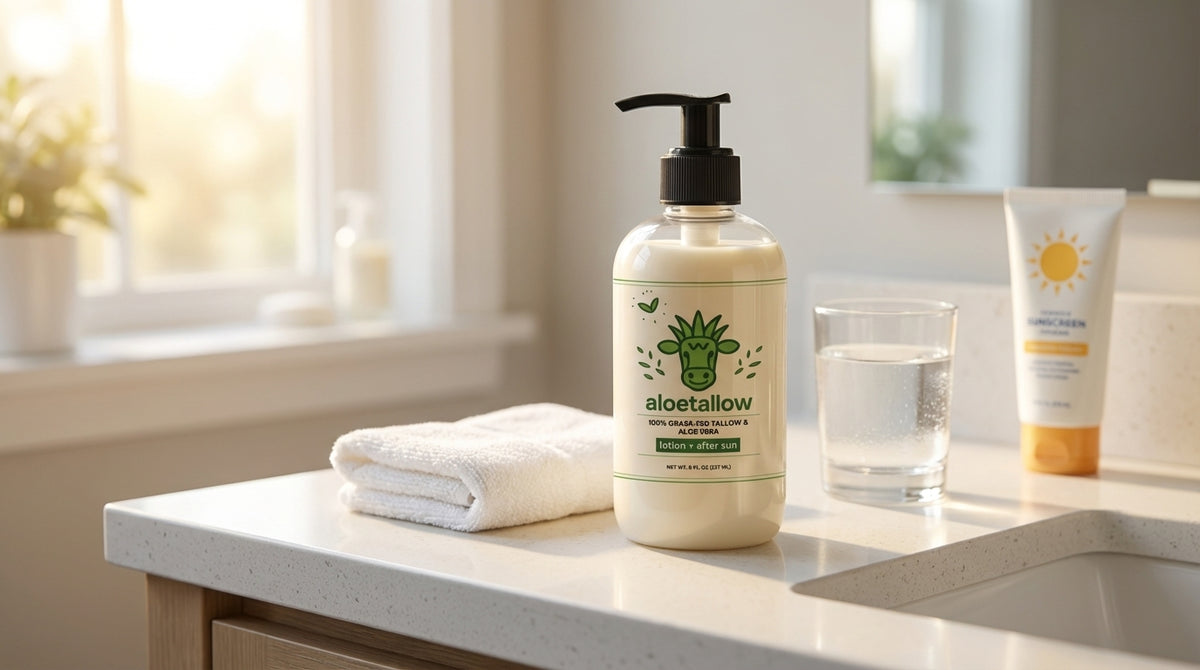
If you're looking for a tallow moisturizer built around this lotion-format principle, AloeTallow is what we made. Grass-fed beef tallow combined with aloe vera in a pump-bottle lotion -- 8 ingredients total, no fragrance, no fillers. It was designed specifically for routines like the ones above: fast absorption, easy layering, and the aloe-tallow combination that makes the after-sun routine work as a single step.

8 ingredients. Grass-fed tallow + aloe vera. Nothing you can't pronounce.
Frequently asked questions
Can I use tallow with retinol?
Yes. Apply retinol first on clean, dry skin. Wait 10-15 minutes for it to absorb, then apply your tallow moisturizer over the top. The tallow acts as an occlusive layer that can actually help reduce the dryness and flaking that retinol commonly causes. Some people find that tallow makes retinol more tolerable because the lipid barrier support offsets the barrier disruption retinol can create. If you're new to retinol, start with retinol every other night and tallow nightly.
Do I need a separate face cream if I'm using tallow on my body?
Not necessarily. The same tallow moisturizer works on both face and body -- you just adjust the amount. Face skin is thinner and has more sebaceous glands, so it needs less product. A pea-sized amount for your entire face versus a nickel-sized amount per body section. If you have very oily facial skin, you might apply tallow only at night and skip the morning facial application. But a separate product isn't required.
How long does it take for skin to adjust to a tallow routine?
Most people notice a difference in skin feel within the first week -- less tightness, less flaking, softer texture. The deeper barrier repair benefits take longer. Research on lipid-based barrier repair suggests 2-4 weeks for measurable improvement in TEWL and barrier integrity. Give it a full month before evaluating results. During the first week, you may notice your skin producing less of its own oil as the external lipid supply reduces the demand on your sebaceous glands.
Can I use tallow under makeup?
Yes, as long as you use a thin layer and let it absorb for 10 minutes before applying makeup. Tallow creates a smooth, hydrated surface that many people find works well as a primer. The key is amount -- too much tallow under makeup causes sliding and breakdown. A thin layer that's fully absorbed gives you a dewy, hydrated base without interfering with foundation adhesion.
Is a tallow routine enough, or do I still need a full 10-step system?
For most people, tallow simplifies the routine significantly. A cleanser, tallow moisturizer, and sunscreen cover the three essential steps: clean, moisturize, protect. You can add treatments like retinol or vitamin C if you have specific goals (anti-aging, hyperpigmentation), but the 10-step approach exists largely because conventional products each do one small thing. Tallow handles multiple functions -- emollient, occlusive, vitamin delivery, barrier support -- in a single layer. Fewer products, fewer potential irritants, less time. That's the practical advantage of building your routine around tallow.
The search volume for "tallow skincare" has grown roughly 300% over the last two years, and the most common follow-up question people have after their first purchase is exactly what this post covers: how do I actually use this? The answer is simpler than most skincare content makes it seem. Cleanse, apply to damp skin, protect from the sun. Add an aloe step after UV exposure. Avoid the five mistakes above. That's the routine. Your skin already recognizes the fatty acids in tallow -- you just need to deliver them at the right time, in the right amount, on the right surface.