Tallow vs Shea Butter for Skin
Each supports the barrier differently. So we use both.
★★★★★ 4.9 out of 5 · 197 customer reviews · 2,400+ customers

- 8 clean ingredients
- No fillers
- 197 customer reviews
- Made in USA
Tallow vs shea butter for skin is a common debate in the clean skincare space. Tallow delivers sebum-matching fatty acids. Shea butter brings vitamins A and E plus anti-inflammatory compounds.
They're not competitors: they're complementary. aloetallow uses both.
30-day money-back guarantee

I live in Miami and I’m really picky about lotion because if it’s too heavy, I’m instantly sweaty and sticky. The tallow lotion felt super rich but still absorbed pretty well, which I liked, and my skin stayed soft even in the humidity. If you have dry skin and live somewhere hot like Miami, this is a nice option, especially if you want something simple and more nourishing.Gianna G.✓ Verified buyer

What Grass-Fed Tallow Does for Your Skin
Human sebum is roughly 50% saturated fat. Grass-fed beef tallow sits right in that range, making it a natural skin barrier repair ingredient that absorbs efficiently instead of sitting on top.
- Oleic acid (40-50%): the same monounsaturated fat your skin produces. Penetrates the lipid barrier and delivers deep moisture.
- Stearic acid: reinforces the skin's protective layer, locking hydration in.
- Palmitoleic acid: naturally present in skin but declines with age. Grass-fed tallow replenishes it.
- Fat-soluble vitamins A, D, E, K: grass-fed sources carry significantly more than grain-fed.
What Shea Butter Does for Your Skin
Shea butter benefits have been known across West Africa for centuries. It's a natural body butter rich in bioactive compounds that calm irritation and protect skin.
- Vitamins A and E: a natural vitamin E moisturizer that supports cell turnover and protects against environmental damage.
- Cinnamic acid esters: mild natural UV-absorbing properties (not a substitute for sun protection, but a bonus).
- Lupeol cinnamate: anti-inflammatory compound shown to reduce skin swelling and redness.
- Oleic + stearic acids: overlapping with tallow's profile, reinforcing the lipid barrier.
On its own, shea butter can feel heavy and takes time to absorb. When blended with tallow and aloe vera in a lotion format, it absorbs cleanly and works faster.
Why Choose When You Can Have Both?
aloetallow contains both grass-fed beef tallow and shea butter, plus 6 more clean ingredients:
- Aloe vera: polysaccharides that hydrate and soothe without drying
- Grass-fed beef tallow: sebum-compatible lipids for barrier repair
- Coconut oil: antimicrobial lauric acid in a supporting role
- Shea butter: vitamins A and E, anti-inflammatory compounds
- Carrot seed oil: steam-distilled essential oil
- Glycerin: humectant that draws moisture from the air
- Emulsifying wax: holds oil and water together for smooth texture
- PE9010: paraben-free preservative
Tallow provides the lipid backbone for skin barrier repair. Shea butter layers on anti-inflammatory support. Eight ingredients total. No fragrance, no fillers, no seed oils.
Eight ingredients. Every one of them earned it.
Most lotions have 22. We chose 8.
Aloe Vera Juice
Aloe vera juice is the first listed component of this aloe-forward lotion.
Grass-Fed Beef Tallow
Wet-rendered grass-fed beef tallow contributes to the lotion's emollient feel.
Coconut Oil
Medium-chain fatty acids with antimicrobial properties. Fast-absorbing, supports barrier function.
Shea Butter
Oleic and stearic acids plus anti-inflammatory triterpenes. Well tolerated by reactive skin.
Carrot Seed Oil
Steam-distilled from Daucus carota seeds. This ingredient is an essential oil.
Vegetable Glycerin
Draws moisture into the barrier and holds it there. Comedogenic rating of 0.
Emulsifying Wax NF
Holds the formula together as a lotion, not a balm. No fragrance, no irritants.
PE 9010 Preservative
PE 9010 combines phenoxyethanol and ethylhexylglycerin to help protect this water-containing lotion from microbial growth.
How the lotion is put together.
Tallow in the oil phase
Grass-fed beef tallow is one of the fats in aloetallow, alongside coconut oil and shea butter. It contributes to the lotion's emollient feel.
aloetallow formula componentsAn aloe-forward lotion
Aloe vera juice is the first listed formula component. The finished lotion combines aloe with oils, fats and glycerin.
aloetallow formula componentsAn emulsified daily moisturizer
Emulsifying wax helps keep the aloe-based and oil-based parts of the lotion mixed. The pump format makes the finished lotion easy to dispense for daily face and body use.
aloetallow lotion formatHow it compares to most lotions.
| Factor | Most lotions | aloetallow |
|---|---|---|
| Ingredient count | ✗ 20–40, most unpronounceable | ✓ 8, all on the front label |
| Fragrance | ✗ Often hidden under “parfum” | ✓ None, ever |
| Parabens | ✗ Common | ✓ Zero |
| Preservative load | ✗ Several, undisclosed levels | ✓ One, named on the label, used within the regulatory limit |
| Industrial seed oils | ✗ Frequently the base | ✓ None |
| Base ingredient | ✗ Water | ✓ Aloe vera juice |
| Absorption | ✗ Sits on top, needs reapplying | ✓ Absorbs in under 60 seconds |
30-day money-back guarantee
What customers actually say.
Love love love this lotion. Keeps my skin hydrated through the day. I travel a lot to cities with all different types of weather and it does the job. Took it with me to Puerto Rico and it was on my HIP LOL. Super clean formula and minimal ingredients unlike some of these other lotions.

I love the ingredient transparency. I flipped over the bottle the first time I used it and was like… wow, that’s actually pronounceable! No fillers, no mystery stuff. My girlfriend even started using it because it’s so clean and simple.

Found this lotion from a facebook ad and can say this lotion is much better than the Cerave lotion I used to use. If you want a tallow lotion with zero greasy feel this one is worth a try

Try it. If it isn't for you, we refund you.
30-day money-back guarantee
Use it for 30 days. If your skin reacts, or you simply don't love it, email us for a full refund.
Ships in 1–2 business days
Tracked, every order. Free shipping on orders over $40.
We reply within 24 hours
Email care@aloe-tallow.com. No return shipment, no restocking fee.
Made with care
Small batch. GMP compliant, FDA MoCRA registered facility. Made in the USA.

Both butters. One short label.
8 ingredients. Grass-fed tallow and aloe vera. Nothing you can't pronounce.
Free shipping · 30-day money-back guarantee
Frequently asked questions.
Is tallow or shea butter better for dry skin?
Both are effective: in different ways. Tallow matches your skin's natural lipid profile for deep absorption. Shea butter adds anti-inflammatory compounds and vitamins A and E. Using them together gives your skin both barrier repair and soothing protection.
Can tallow and shea butter be used together?
Absolutely. They share oleic and stearic acids but bring different secondary compounds. Tallow contributes palmitoleic acid and fat-soluble vitamins. Shea butter adds cinnamic acid esters and lupeol. They're more effective combined than alone.
Is tallow comedogenic?
Beef tallow has a comedogenic rating of 0-2, meaning it's unlikely to clog pores. Its fatty acid profile is similar to human sebum, so skin absorbs it efficiently instead of reacting.
How many ingredients does Aloetallow have?
Eight. Aloe vera, grass-fed beef tallow, coconut oil, shea butter, carrot seed oil, glycerin, emulsifying wax, and PE9010 (paraben-free preservative). No fragrance, no fillers, no seed oils.
CURRENT PRODUCT DETAILS
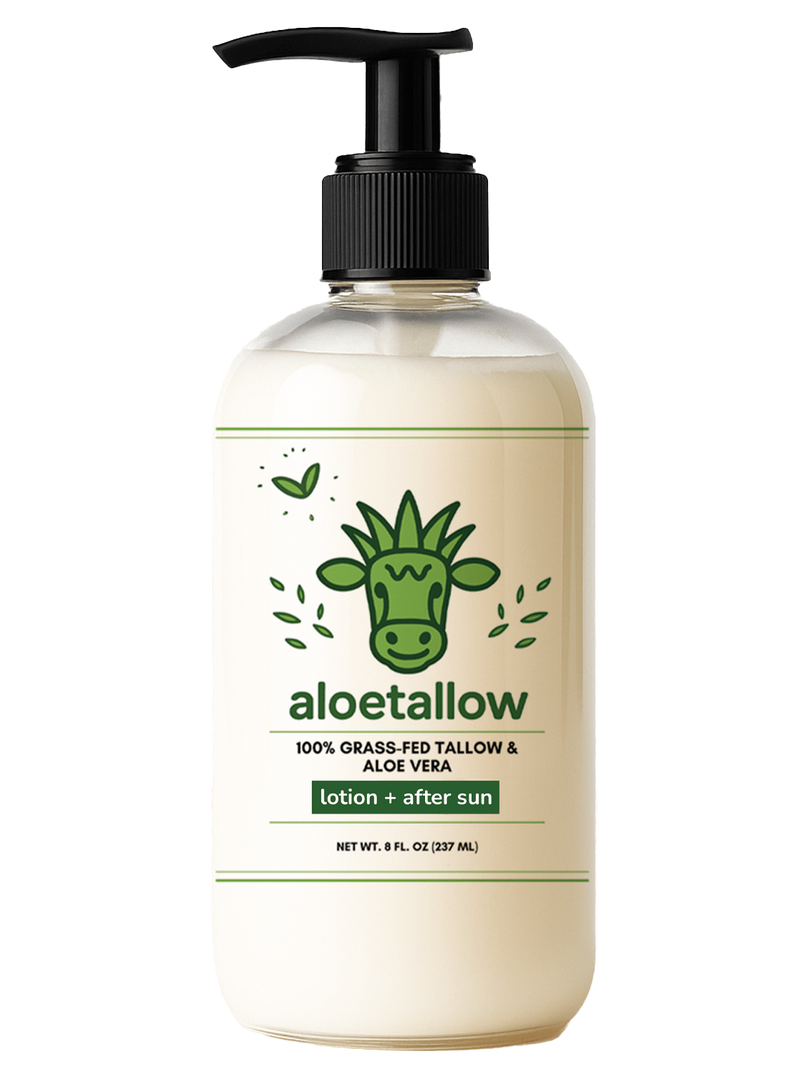
aloetallow is a face and body lotion made with aloe vera juice and grass-fed beef tallow, supplied in an 8 fl oz (237 mL) pump bottle.
- An aloe-based lotion emulsion, rather than an anhydrous tallow balm.
- Also contains coconut oil, shea butter, vegetable glycerin and emulsifying wax NF.
- Contains steam-distilled carrot seed essential oil. Check the ingredient list if you avoid essential oils.
- Preserved with PE 9010: phenoxyethanol and ethylhexylglycerin.
- No added fragrance; the ingredients can have a mild natural scent.
- One Bottle $29.99 USD Available
- Two Pack: Popular $49.99 USD Available
- Best Value Pack $69.99 USD Available
One-time purchase prices shown. Choose your option on the product page.
view product details