You're Sealing a Broken Barrier Instead of Fixing It
Your skin barrier breaks down. You reach for a thicker moisturizer. The tightness fades for a few hours. Then it comes back, so you reapply. Every day, the same cycle.
Here's the problem: most moisturizers marketed as "barrier repair" are just heavier versions of the same approach — they create a temporary seal on top of skin using synthetic occlusives like dimethicone, petrolatum, or mineral oil. The surface feels smoother. But underneath that seal, your actual lipid barrier — the one made of ceramides, cholesterol, and fatty acids — is still damaged.
Real barrier repair requires supplying the building materials your skin needs to reconstruct that lipid matrix. And that's a fundamentally different approach than just coating the damage.
How Your Skin Barrier Actually Works
Your skin barrier isn't a single layer — it's a structure called the stratum corneum, built like a brick wall. The "bricks" are dead skin cells (corneocytes). The "mortar" is a lipid matrix made of roughly:
- 50% ceramides — long-chain fatty acid compounds
- 25% cholesterol — provides structural rigidity
- 15% free fatty acids — primarily palmitic acid, stearic acid, and oleic acid
- 10% other lipids — including cholesterol sulfate and fatty acid esters
When this lipid mortar is intact, it holds moisture in and keeps irritants, allergens, and bacteria out. When it breaks down — from UV damage, harsh cleansers, dry air, over-exfoliation, or aging — water escapes (transepidermal water loss) and external irritants get in.
A 2019 review in the Journal of Clinical Medicine confirmed that barrier dysfunction underlies most common skin complaints: dryness, sensitivity, redness, flaking, and that tight feeling after cleansing. Fix the barrier, and most of these symptoms resolve on their own.
Why Most "Barrier Repair" Products Don't Actually Repair
There are two fundamentally different approaches to a damaged barrier:
Approach 1: Seal the surface (occlusion)
This is what most products do. Ingredients like petrolatum, dimethicone, and mineral oil form a physical layer that reduces water loss. It works — temporarily. Studies show petrolatum reduces TEWL by up to 98%. But it doesn't supply any of the fatty acids, ceramides, or cholesterol that your barrier needs to actually rebuild. When you stop applying, the barrier is still broken.
Approach 2: Supply the building materials (lipid replacement)
This means delivering the actual fatty acids and lipids your barrier uses to reconstruct its mortar layer. Research in the Journal of Investigative Dermatology has shown that topical application of physiological lipids — in the right ratios — can restore barrier function within days rather than weeks.
The ideal barrier repair product does both: supplies the lipids your barrier needs AND provides enough occlusion to reduce water loss while the repair happens. But the lipid supply is the part most products skip entirely.
Why Tallow Is a Barrier Repair Ingredient (Not Just a Moisturizer)
Grass-fed beef tallow isn't a trendy alternative. It's a lipid source that happens to match your skin's barrier composition better than almost any other natural ingredient.
The key fatty acids in grass-fed tallow and their barrier functions:
- Palmitic acid (25-30%) — the most abundant fatty acid in the stratum corneum's lipid matrix. Directly supplies the material your barrier uses to fill gaps between corneocytes.
- Stearic acid (15-20%) — a 2019 study in the Journal of Lipid Research showed stearic acid upregulates ceramide synthesis. It doesn't just fill gaps — it triggers your skin to produce more of its own barrier lipids.
- Oleic acid (40-50%) — enhances absorption of other fatty acids into the stratum corneum. Also provides occlusive function while barrier lipids are being rebuilt.
- Palmitoleic acid (2-4%) — a component of human sebum that most plant-based oils don't contain. Supports the skin's natural antimicrobial defense while the barrier is compromised.
Together, these fatty acids do what synthetic occlusives can't: they integrate into the existing lipid structure and provide raw materials for active barrier reconstruction.
Why Lotion Format Outperforms Balm for Barrier Repair
Tallow balms deliver the fatty acids but miss the hydration component. A damaged barrier is losing water — so effective repair needs to address both the lipid damage AND the water loss simultaneously.
Lotion format (an oil-in-water emulsion) delivers:
- Immediate hydration from the water phase — replenishes moisture the damaged barrier has lost
- Lipid delivery from the tallow — supplies fatty acids that integrate into the barrier matrix
- Better absorption — emulsified lipids penetrate the stratum corneum more effectively than pure oils applied to the surface
- Daily wearability — absorbs without greasy residue, so you'll actually use it consistently. Barrier repair requires consistent application over 2-4 weeks, not occasional heavy treatments.
The Role of Complementary Ingredients
Tallow provides the fatty acid foundation. But a well-designed barrier repair lotion pairs it with ingredients that enhance the repair process:
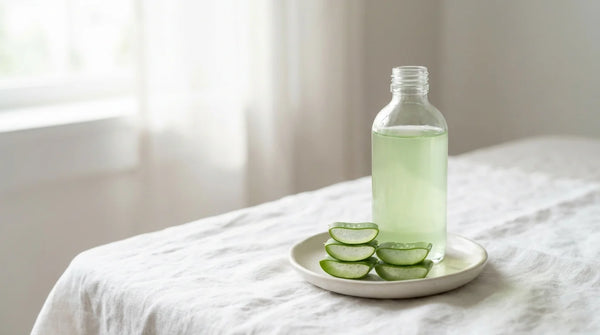
- Aloe vera — contains acemannan, a polysaccharide shown to increase moisture retention in the stratum corneum. Also provides anti-inflammatory activity (reduces cytokine production) that calms irritation while the barrier rebuilds — a mechanism that extends to tattoo aftercare and other wound-healing contexts.
- Jojoba oil — technically a liquid wax ester, structurally similar to human sebum. Acts as a secondary barrier-supporting lipid and enhances the spreadability of the lotion.
- Beeswax — provides gentle occlusion without the complete seal of synthetic occlusives. Reduces TEWL while still allowing some skin respiration.
- Vitamin E — a fat-soluble antioxidant that protects the barrier's lipids from oxidative damage. Particularly important during repair when new lipids are being laid down.
The AloeTallow Formula
AloeTallow was designed around barrier repair science. The complete formula: grass-fed beef tallow, aloe vera, jojoba oil, beeswax, rosemary extract, vitamin E, lavender essential oil, and frankincense essential oil.
Eight ingredients. Every one has a documented function in skin barrier maintenance or repair. Nothing is there for fragrance, shelf stability, or marketing — the formula works because it's built from the lipids your skin actually uses.
It absorbs in seconds, works under clothing and makeup, and provides both the lipid building materials and the hydration your barrier needs to reconstruct itself. Most people notice reduced tightness and flaking within 3-5 days. Full barrier restoration typically takes 2-4 weeks of consistent use.

8 ingredients. Grass-fed tallow + aloe vera. Nothing you can't pronounce.
Frequently Asked Questions
How do I know if my skin barrier is damaged?
Common signs: tightness after cleansing, visible flaking or peeling, redness that wasn't there before, increased sensitivity to products that didn't previously irritate you, and skin that feels dry no matter how much moisturizer you apply. If your skin absorbs moisturizer quickly and still feels dry within an hour, your barrier is likely compromised.
How long does barrier repair take?
With consistent application of the right lipids, most people see noticeable improvement in 3-5 days (reduced tightness and flaking). Full barrier restoration — where your skin maintains hydration on its own throughout the day — typically takes 2-4 weeks. Severely compromised barriers (from retinoid overuse, chemical peel recovery, or chronic conditions like eczema) may take longer.
Can I use barrier repair lotion with my other skincare products?
Yes, but simplify your routine while your barrier is compromised. Pause actives (retinol, AHAs, BHAs, vitamin C serums) until your barrier has recovered. Use a gentle cleanser, your barrier repair lotion, and sunscreen. That's it. Reintroduce actives one at a time after the tightness and sensitivity have resolved.
Is tallow lotion better than ceramide creams for barrier repair?
Both supply barrier-compatible lipids. Ceramide creams target one component of the barrier. Tallow supplies a broader spectrum of fatty acids (palmitic, stearic, oleic, palmitoleic) plus fat-soluble vitamins. Research suggests the barrier benefits from a full lipid profile rather than isolated ceramides. They're complementary — but for a single-product approach, tallow covers more bases.
Should I apply barrier repair lotion to damp skin?
Yes. Applying to slightly damp skin (within 2-3 minutes of showering) helps lock in the water your skin just absorbed. The lotion's lipids then seal that moisture in while its fatty acids integrate into your barrier. This is the most effective application method for barrier repair.