know what you're putting on your skin.
we break down ingredients, debunk skincare myths, and tell you what actually works.
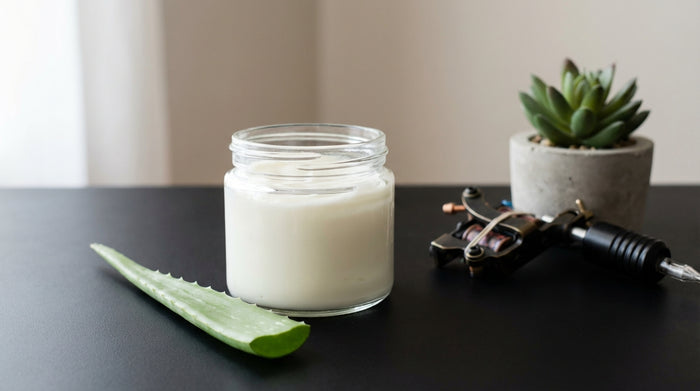
Fresh ink needs careful aftercare, but most people either stop moisturizing too soon or slather on the wrong formula for too long. Here's a science-backed, day-by-day timeline for using aloe vera on a new tattoo — and what actually matters for each healing phase.
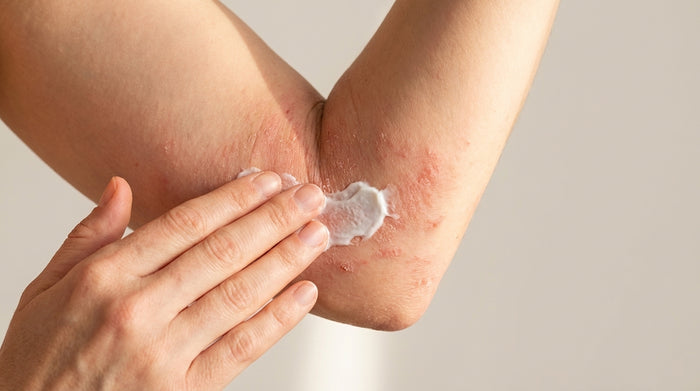
Eczema is a barrier disease. Tallow's fatty acids match human skin lipids better than most moisturizers. But it's not a cure — here's an honest look at what tallow can and can't do for eczema-prone skin.
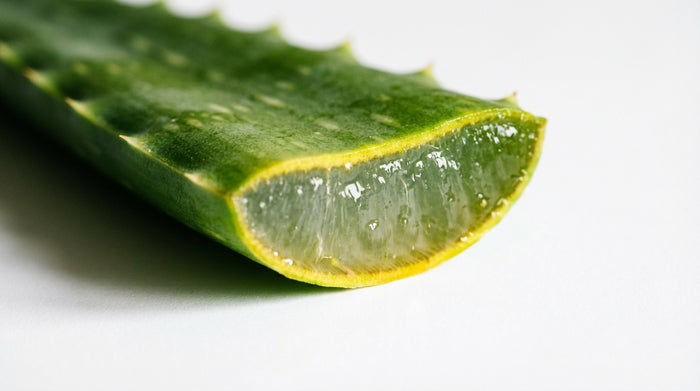
"Is aloe toxic?" gets searched 590 times a month. The answer is nuanced — one part of the plant is, and one part isn't. Here's what you need to know about aloe vera safety for topical and internal use.
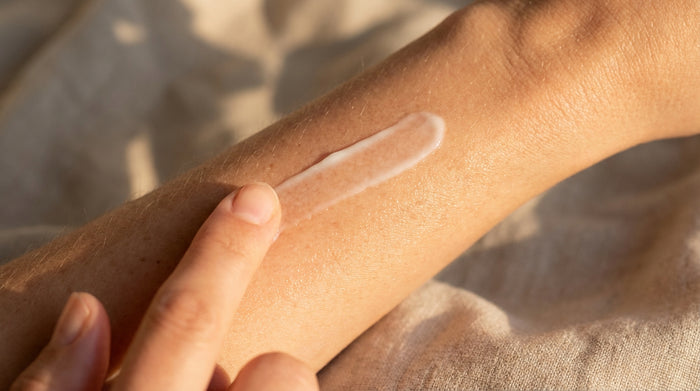
Most "barrier repair" products are just heavier occlusives. They seal the surface while your actual lipid matrix stays broken underneath. Here's what the research says about really fixing it.
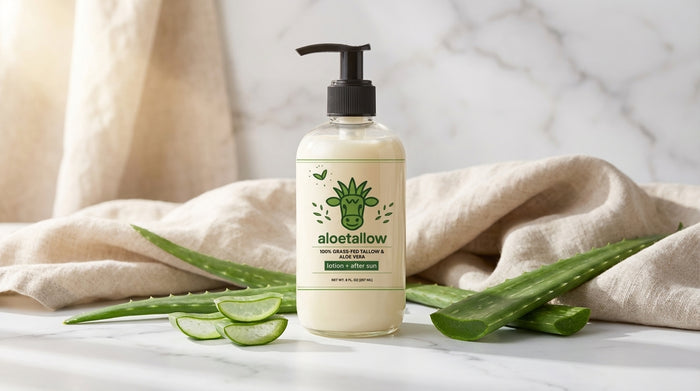
"Sensitive skin" formulas still average 20+ ingredients — and many of them are the exact things making your skin react. Here's what to actually look for in a natural body lotion that won't irritate.
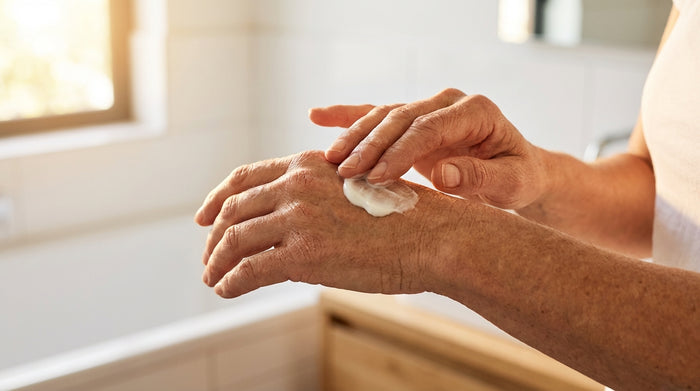
Most tallow skincare comes in balm form — thick, waxy, sits on top. But for chronically dry skin, lotion format changes how tallow's fatty acids actually reach your skin barrier. Here's the science.
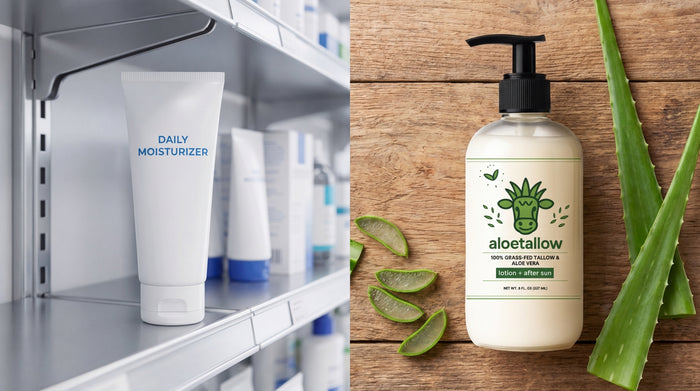
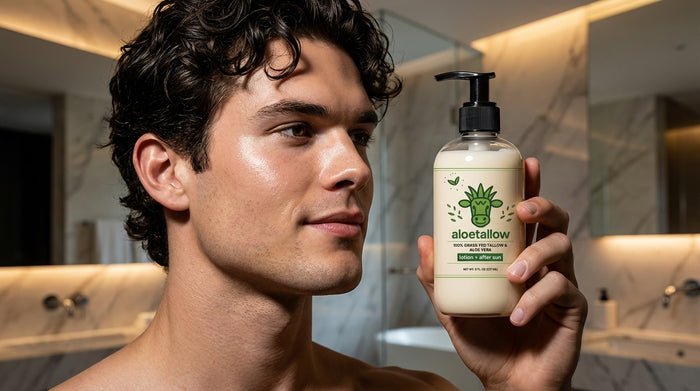
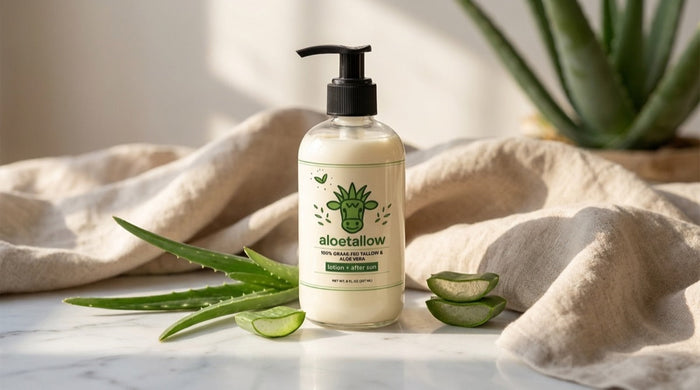
the lotion this journal is about
Grass-fed tallow, aloe vera, and 6 other ingredients you can actually pronounce. No fillers, no fragrance, no guesswork.
See what's in it