You've tried the thick creams. You've layered the serums. You drink the water, run the humidifier, skip the long hot showers -- and your skin is still dry. Tight by midday, flaking at the corners, rough to the touch even an hour after moisturizing. You've probably been told this is just your skin type, or that you need to find the "right" product, or that you need to moisturize more often. The honest answer is that none of those suggestions address the actual problem. Persistent dry skin isn't a hydration deficit you can pour your way out of. It's a barrier problem.
When your skin barrier is intact, it keeps water in. When it's compromised -- whether by stripping cleansers, over-exfoliation, cold weather, aging, or just an ingredient list that's been working against it for years -- water escapes faster than your skin can hold it. Every moisturizer you apply is working against a leak that hasn't been repaired. Understanding this distinction is the difference between managing dry skin indefinitely and actually fixing it.
What the Science Says About Dry Skin
Your skin's outermost layer, the stratum corneum, functions as a physical and chemical barrier. Think of it as a brick-and-mortar structure: the corneocytes (flattened dead skin cells) are the bricks, and between them is a lipid matrix -- a precise arrangement of ceramides, cholesterol, and free fatty acids organized into lamellar bilayers. When this lipid mortar is intact, it maintains what dermatologists call a low transepidermal water loss (TEWL) rate. Water stays in. Irritants and microbes stay out.
When the mortar degrades -- through physical damage, lipid-stripping surfactants, environmental stressors, or simple age-related decline in lipid synthesis -- TEWL increases. Water leaves the stratum corneum faster than the skin can replace it. The result: tightness, flaking, roughness, and the kind of reactive sensitivity that makes you question every product you put on your face.
A 2014 review in the British Journal of Dermatology analyzed the structural differences between chronically dry skin and normal skin and found a consistent pattern: reduced ceramide content, disrupted fatty acid ratios, and impaired lamellar bilayer formation in the stratum corneum. The dry skin wasn't a symptom of not moisturizing enough. It was a symptom of a structural lipid deficit in the barrier itself.
A 2013 study in the Journal of Dermatological Science went further, measuring TEWL across a range of environmental conditions and skin barrier states. It found that once the barrier was compromised past a threshold, conventional water-based moisturizers not only failed to improve TEWL -- they showed minimal benefit at all within four hours of application, because water placed on top of a compromised barrier evaporates along with the skin's own moisture.
This explains something that anyone with chronically dry skin has experienced firsthand: you apply moisturizer, you feel better for an hour, and then your skin is dry again. The problem isn't the moisturizer. The problem is that you're filling a bucket with a hole in the bottom.
Why Conventional Moisturizers Keep Failing
The conventional approach to dry skin is almost universally the same: apply more moisturizer, more often. The implicit assumption is that the skin is thirsty for water. But the research suggests the more accurate model is that the skin's barrier is leaking, and most moisturizers are designed to temporarily cap the leak rather than repair it.
Examine the ingredient list of a typical drugstore moisturizer for dry skin:
- Water -- first ingredient, meaning it's the majority of the formula. It evaporates. It doesn't stay.
- Glycerin -- a humectant that draws water toward the skin surface. Genuinely helpful, but only if an effective occlusive is present to keep that water from evaporating immediately.
- Petrolatum or mineral oil -- effective occlusives that slow TEWL, but provide zero structural lipids for barrier rebuilding. Your skin borrows time, not repair material.
- Dimethicone -- a silicone that creates a smooth, temporarily protective film. A 2019 analysis in Cosmetics confirmed silicone-based occlusion does not contribute to structural barrier repair the way lipid-based occlusion does. When it washes off, the barrier is unchanged.
- Synthetic emulsifiers (cetearyl alcohol, polysorbates) -- surfactant compounds required to stabilize the water-oil mixture. Research published in Skin Pharmacology and Physiology (2016) documented that repeated emulsifier exposure can disrupt the skin's lipid bilayers, gradually worsening the barrier problem the product is supposed to address.
The honest summary: most dry skin moisturizers reduce symptoms without providing the raw materials your skin needs to stop being dry. They're management tools, not repair tools. If you've been using the same product for months and your skin is still dry, this is probably why. More of the same formula will produce more of the same result.
The "natural" product aisle often reproduces the same structural problem with different labels -- plant-derived emulsifiers instead of synthetic ones, aloe vera water (diluted) instead of water, botanical oils listed at position eight. The framework is the same: water-first, emulsifier-stabilized, with beneficial ingredients in supporting concentrations.
Why the Base Fat Matters for Dry Skin
If dry skin is fundamentally a lipid barrier problem, then the most relevant question isn't "what humectant should I use?" It's "what lipid will my skin's barrier actually accept as repair material?"
The answer depends on fatty acid composition. The stratum corneum's lamellar bilayers are built from specific fatty acids -- primarily palmitic (~26%), oleic (~47%), and stearic (~14%) -- organized in precise structural ratios. Research by Peter Elias and colleagues at UCSF, published in the Journal of Clinical Investigation, demonstrated a principle that changes how you should think about moisturizer selection: the stratum corneum selectively incorporates topical lipids based on structural compatibility. Lipids that match the native composition integrate into the barrier and support its recovery. Lipids that don't match may disrupt the molecular packing order.
This is where beef tallow enters the picture. Rendered from grass-fed cattle, tallow's fatty acid profile is closer to human sebum than virtually any plant oil:
- Palmitic acid (~26%) -- mirrors its proportion in human sebum. Structural and barrier-stabilizing.
- Oleic acid (~47%) -- a monounsaturated fatty acid that enhances flexibility in the lipid bilayers and improves penetration of complementary compounds.
- Stearic acid (~14%) -- critical to the ordered packing of the stratum corneum's mortar. Present in human sebum at similar concentrations.
- Palmitoleic acid (~3-4%) -- an antimicrobial fatty acid that declines in human sebum with age and has been associated with pathogen defense on the skin surface.
A 2017 analysis in Lipids in Health and Disease compared a range of animal and plant fats to human subcutaneous fat. Tallow had the highest structural similarity of the group -- closer than coconut oil, shea butter, jojoba, or olive oil. What this means practically: the fatty acids in tallow are structurally recognized by the skin's barrier in a way that makes genuine integration -- not just surface coating -- more likely.
Grass-fed tallow also contains fat-soluble vitamins A, D, E, and K2 in naturally occurring forms. Vitamin A supports cell turnover in the epidermis, ensuring that new corneocytes replace compromised ones efficiently. Vitamin E (tocopherol) protects the barrier's lipid structures from oxidative damage -- a particular issue in dry skin where the barrier is already structurally weakened and vulnerable.
This is why the approach outlined in the research on beef tallow for dry skin looks different from conventional moisturizer recommendations. You're not adding more water. You're giving the barrier the structural lipids it needs to stop losing water in the first place.
Why Tallow and Aloe Work Together for Dry Skin
Repairing a dry skin barrier involves two parallel problems: the lipid layer needs to be replenished from the outside, and the dehydrated stratum corneum needs water drawn toward it from the inside. Tallow addresses the first. Aloe vera addresses the second. But both do considerably more than their primary function.
Aloe barbadensis leaf gel is one of the most researched plant compounds for topical skin application. Its polysaccharide fraction -- particularly acemannan -- forms a hydrating film that binds moisture against the skin surface. A 2019 review in the Journal of Dermatological Treatment summarized its mechanisms: acemannan attracts and retains water more effectively than glycerin at equivalent concentrations, and unlike glycerin, it also stimulates fibroblast proliferation and collagen synthesis in the dermis beneath the barrier. You're getting humectant activity plus cellular repair support in one ingredient.
Aloe also contains naturally occurring salicylic acid -- a gentle exfoliant that clears the accumulation of dead surface cells that forms on chronically dry skin. This isn't a dramatic chemical peel effect. It's a gradual clearing of the surface layer that improves the skin's ability to absorb the lipids in the tallow layer above it. The combination creates a delivery system where the aloe prepares the surface and the tallow provides the structural repair material.
The anti-inflammatory dimension matters too. Tallow's palmitoleic and palmitic acid fractions have documented anti-inflammatory activity -- a 2011 review in Nutrients found these fatty acids modulate pro-inflammatory cytokine production. Dry skin is almost always accompanied by low-grade inflammation; the skin is stressed and reactive. Reducing that inflammatory load while simultaneously repairing the barrier accelerates the recovery process.
Compare this to the conventional "humectant plus occlusive" pairing that moisturizer formulas aim for: glycerin (humectant) plus petrolatum or dimethicone (occlusive). The mechanism is similar in structure, but neither glycerin nor petrolatum contributes to barrier repair at a structural level. They borrow time. Tallow and aloe, together, are doing more work.
Practical Steps for Fixing Dry Skin Naturally
Here's what the research on dry skin and barrier repair actually supports, translated into actionable steps:
1. Stop stripping what you're trying to repair
Every surfactant cleanser removes lipids from the skin surface along with dirt and oil. If you're dealing with chronically dry skin, the cleanser question matters as much as the moisturizer question. A 2010 study in Dermatology found that mild syndets (synthetic detergent bars with a pH closer to skin's natural 4.5-5.5) caused significantly less barrier disruption than traditional soap. If you're washing your face or body with a harsh lathering cleanser and then applying moisturizer, you're fighting yourself. Oil cleansing or gentle milk cleansers preserve more of the barrier's lipid content between applications.
2. Apply moisturizer to damp skin
This isn't a myth. A humectant applied to skin that's slightly damp draws that surface water toward the stratum corneum more effectively than the same ingredient applied to dry skin. Apply your moisturizer within two to three minutes of washing while the skin is still lightly damp -- not soaking, just damp. The difference is measurable. A 2016 study in International Journal of Cosmetic Science confirmed that post-wash moisturizer application timing significantly affects short-term hydration retention.
3. Prioritize occlusion in the evening
Your skin's repair processes are most active at night. TEWL is also higher during sleep because the thermoregulatory warmth accelerates evaporation. A richer, more occlusive formula applied at night -- something with a higher tallow or fat content -- works with your skin's natural repair cycle rather than against it.
4. Address the environment, not just the product
Indoor heating, low humidity, and wind are significant contributors to elevated TEWL. A room humidity level below 40% measurably increases water loss from the stratum corneum. A humidifier in your bedroom during dry months addresses a root cause, not a symptom. No moisturizer can fully compensate for consistently stripping environmental conditions.
5. Simplify your routine
More products means more variables means more potential irritants on already-compromised skin. Every additional ingredient is something your weakened barrier has to process. If you're dealing with significant barrier damage, stripping your routine to two or three products with short ingredient lists often produces better results than adding a targeted serum for every symptom. People with reactive skin especially benefit from this approach.
6. Give it time
Barrier repair doesn't happen in a day. The stratum corneum replaces itself roughly every two to four weeks under normal conditions. A compromised barrier under active repair can take four to twelve weeks to measurably recover, depending on the severity of the damage. If a product is genuinely working, you may not feel it for three to four weeks. Don't rotate products faster than the barrier cycle -- you'll never get clear data on what's actually helping.
The AloeTallow Formula
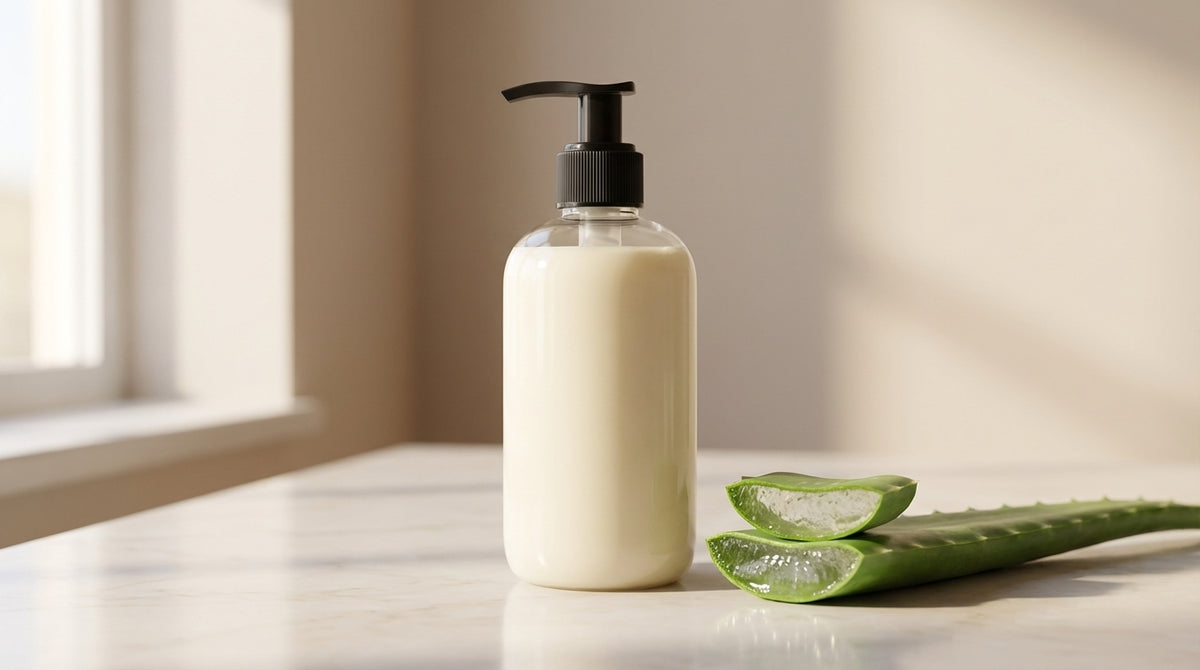
We built Aloetallow around the biology of what dry skin actually needs. Grass-fed beef tallow provides the full structural fatty acid profile -- palmitic, oleic, stearic, palmitoleic -- in ratios that match human sebum and support genuine integration into the skin's lipid matrix. Aloe vera gel provides humectancy, anti-inflammatory activity, and cellular repair support. The full formula is eight ingredients. No water filler, no synthetic emulsifiers, no fragrance. If your skin has been managed but never actually fixed by the products you've been using, this is a structurally different approach.

8 ingredients. Grass-fed tallow + aloe vera. Nothing you can't pronounce.
FAQ
Why is my skin still dry even though I moisturize every day?
Daily moisturizing helps, but if your skin is still dry despite consistent application, the most likely explanation is that your moisturizer is managing the symptoms of a compromised barrier without repairing the underlying structure. Water-based formulas temporarily add moisture to the surface. If your skin's lipid mortar is depleted, that surface moisture evaporates quickly and you're back where you started. The fix isn't more of the same moisturizer -- it's a formula that provides structurally compatible lipids that your barrier can actually incorporate. Once the barrier is repaired, water retention improves naturally and you need less product to maintain hydration.
Does drinking more water fix dry skin?
Hydration status plays a role in skin health, but for most people with chronically dry skin, drinking more water isn't the limiting factor. A 2015 review in Nutrition Reviews found that increased water intake improved hydration in people who were already significantly dehydrated, but had minimal measurable effect on skin barrier function in normally hydrated individuals. If you're drinking adequate fluids and your skin is still dry, the problem is barrier integrity -- not systemic dehydration. No amount of water intake compensates for a barrier that's actively losing moisture faster than the body can supply it.
Can I fix dry skin naturally without using any products?
To a degree. Environmental factors -- humidity, wind, harsh cleansers -- are often major contributors that no product can fully offset. Stopping the stripping behavior (harsh cleansers, over-exfoliation, extremely hot showers) removes barrier insults and allows natural repair to occur. Your skin produces its own sebum continuously, and under good conditions that natural oil production can partially maintain the barrier. However, if your skin is severely dry, producing insufficient sebum due to age or skin type, or has a compromised barrier that isn't recovering on its own, some form of topical lipid support accelerates repair meaningfully.
Is tallow suitable for dry skin on the face?
Yes, and it's particularly well-suited. The concern about animal fats on the face typically centers on pore clogging -- but as the research on comedogenicity shows, the scale used to rate pore clogging potential was developed using rabbit ear skin, which is far more sensitive than human facial skin and doesn't accurately predict human responses. Tallow's fatty acid profile -- closely matching human sebum -- means it integrates with the skin's own oil production rather than disrupting it. Most people with dry facial skin find that tallow-based products absorb without leaving a heavy or greasy residue, because the skin recognizes and processes the composition efficiently.
How do I know if my skin barrier is actually damaged versus just dry?
The clearest signal is reactivity. Skin with an intact barrier can tolerate a range of products without significant reaction. When the barrier is compromised, products that never caused problems before suddenly sting, redden, or irritate. Other indicators: persistent tightness that returns within an hour or two of moisturizing, dryness localized to areas that get the most cleanser contact (T-zone edges, around the mouth), and sensitivity to temperature changes or wind. If you recognize those patterns, you're likely dealing with a compromised barrier rather than simple dryness -- and the repair approach outlined here, focused on structural lipid compatibility rather than just adding water, is the more relevant framework. For more on the connection between barrier damage and eczema-like symptoms, that link is worth reading.