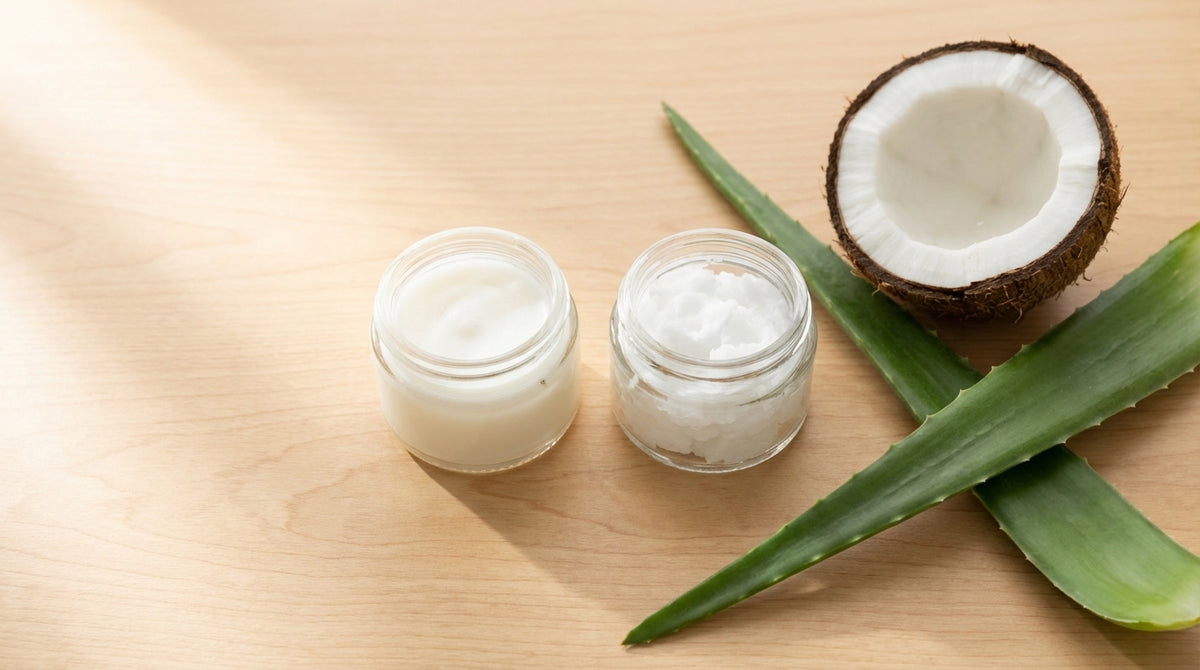
Coconut oil had a long run as the go-to natural moisturizer. It smells good, it's cheap, it's found in every grocery store, and it has a genuinely impressive list of documented properties -- antimicrobial activity, solid texture that melts at body temperature, reasonable shelf stability. People used it on their skin for years and swore by it. Then some people started reporting clogged pores and breakouts. Then the research on comedogenicity started circulating. Now tallow is showing up in the same conversation with a different claim: that it's structurally closer to human skin. Both claims have merit. But the details matter, and the differences between these two fats are more meaningful than most comparisons acknowledge.
What the science says about skin-compatible fats
Your skin produces its own fat -- sebum -- that serves as the primary protective coating of the stratum corneum. Sebum isn't a single compound. It's a mixture of triglycerides (~57%), wax esters (~26%), squalene (~12%), and free fatty acids (~5%), each playing a specific structural or functional role in maintaining barrier integrity and surface protection.
When you apply a topical fat to your skin, the relevant question is: how closely does the fatty acid composition of that fat match what your skin is already producing? Closer matches tend to integrate into the skin's lipid matrix more effectively. Mismatches sit on the surface, or worse, disrupt the existing structure.
A 2017 analysis in Lipids in Health and Disease compared the fatty acid profiles of 27 commonly used topical fats -- plant oils, animal fats, and synthetic lipids -- against human subcutaneous fat (a reasonable proxy for sebum composition). The paper found that among the fats tested, beef tallow showed the highest degree of structural similarity to human skin fat. This finding aligns with earlier research by Peter Elias and colleagues at UCSF, whose work on barrier lipid composition over several decades established that barrier repair requires lipids in specific ratios -- and that mismatched lipids can actually impair recovery rather than support it.
This is the scientific basis for the tallow-for-skin argument. Not that it's natural. Not that it's traditional. That its molecular composition resembles what your skin is already trying to produce.
Why conventional plant oils often fall short -- and why coconut oil specifically has limitations
Coconut oil is approximately 90% saturated fat, which sounds like a good thing for a topical application -- saturated fats are stable, resistant to oxidation, and solid at room temperature. But the specific saturated fats in coconut oil are quite different from those in human sebum.
The fatty acid profile of virgin coconut oil breaks down roughly like this:
- Lauric acid (~47%) -- a medium-chain saturated fatty acid with documented antimicrobial activity
- Myristic acid (~18%) -- another saturated fatty acid, also medium-chain
- Caprylic acid (~8%) -- medium-chain, antimicrobial
- Capric acid (~7%) -- medium-chain
- Palmitic acid (~8%) -- present in coconut oil at low concentrations
- Oleic acid (~6%) -- the primary monounsaturated fatty acid in human sebum, present only in trace amounts in coconut oil
- Stearic acid (~3%) -- present at low concentrations
The problem is that medium-chain fatty acids -- lauric, myristic, caprylic, capric -- are largely absent from human sebum. These are not the fatty acids your skin's lipid matrix is built from. They're metabolized differently, interact with the skin differently, and don't integrate into the lamellar bilayer structure the way long-chain fatty acids do.
Lauric acid does have real antimicrobial activity -- a 2009 study in the Journal of Investigative Dermatology demonstrated that lauric acid inhibited Propionibacterium acnes more effectively than benzoyl peroxide in vitro. That's legitimately useful in the right context. But antimicrobial activity and barrier compatibility are different properties. A compound can kill bacteria and still disrupt your skin's lipid organization.
The more significant issue is comedogenicity. The comedogenicity scale rates ingredients on their tendency to block pores on a 0-5 scale. Coconut oil consistently rates 4 out of 5 -- among the highest of commonly used natural fats. It's worth noting that the scale was originally developed using rabbit ear models, which are more sensitive than human facial skin, so real-world responses vary. Some people use coconut oil on their face for years without issue. But a meaningful portion of people -- particularly those with acne-prone or oily skin -- report increased congestion and breakouts when using coconut oil as a facial moisturizer. A 2012 review in Clinics in Dermatology confirmed coconut oil's high comedogenic potential relative to other plant oils and noted that lauric and myristic acids are among the fatty acids most associated with comedone formation in susceptible individuals.
Coconut oil works better in some applications than others. As a hair conditioner, its molecular size allows it to penetrate the hair shaft and reduce protein loss (documented in a 2003 study in the Journal of Cosmetic Science). As an antibacterial agent on intact, non-acne-prone skin, its lauric acid content is functional. As a body moisturizer on skin below the neck, where pore size is smaller and sebum production lower, it's less problematic. But as a facial moisturizer for someone with acne-prone skin or large pores, it's genuinely a poor choice -- not because it's unnatural but because its fatty acid profile conflicts with what that skin type needs.
Why the base fat matters -- tallow's fatty acid profile and sebum similarity
Contrast coconut oil's fatty acid profile with grass-fed beef tallow:
- Oleic acid (~47%) -- the dominant fatty acid in human sebum, enhances penetration, maintains membrane fluidity, integrates readily into the stratum corneum's lamellar matrix
- Palmitic acid (~26%) -- the primary saturated fatty acid in human skin lipids, essential for structural integrity of the lipid barrier
- Stearic acid (~14%) -- a long-chain saturated fatty acid that is a structural component of the intercellular cement between skin cells
- Palmitoleic acid (~3-4%) -- an antimicrobial fatty acid naturally present in healthy human sebum, produced by the skin's own sebaceous glands
This profile closely mirrors what human sebaceous glands produce. Oleic acid at ~47% in tallow versus ~25-30% in human sebum. Palmitic acid at ~26% in tallow versus ~22-25% in human sebum. Stearic acid at ~14% in tallow versus ~3-8% in human sebum. The ratios aren't identical -- tallow has more stearic acid relative to sebum -- but the molecular architecture is far closer than coconut oil's medium-chain-dominated profile.
This matters for a specific reason. The stratum corneum's lamellar bilayers -- the "mortar" between skin cells that controls water retention -- are assembled from long-chain fatty acids, ceramides, and cholesterol. When you apply tallow, the oleic, palmitic, and stearic acids slot into this existing structure in ways that medium-chain fatty acids simply don't. They reinforce the mortar rather than disrupting it.
For people interested in repairing dry skin at a structural level rather than just temporarily coating the surface, this distinction is the most important thing to understand about fat selection for topical use. It's not about natural versus synthetic, or animal versus plant. It's about which fatty acids your skin's barrier is actually built from.
Grass-fed tallow also delivers fat-soluble vitamins -- A, D, E, and K2 -- in their naturally occurring forms. Vitamin E (tocopherol) functions as a lipid-soluble antioxidant, protecting the lipid structures of the barrier from oxidative degradation. Vitamin A (retinol) supports cell turnover. These compounds are inherent to the fat rather than added afterward, which means they're delivered in a lipid matrix that enhances their absorption rather than a water-based carrier that doesn't.
Tallow's comedogenicity rating is 2 out of 5 -- significantly lower than coconut oil. Research on sebum-similar fats and comedogenicity consistently finds that oils with fatty acid profiles resembling sebum are less likely to cause comedone formation, because they don't disrupt the pore's own lipid balance in the way that structurally foreign fats do. That said, individual responses vary. Read more about what the science actually says about whether tallow clogs pores.
Why tallow and aloe work together -- complementary mechanisms
Tallow handles the lipid side of skin health: barrier reinforcement, occlusion, fatty acid replenishment. But skin hydration isn't only a lipid problem. The dermis and deeper epidermis need water, and the aqueous component of skin moisture requires different support than the lipid component.
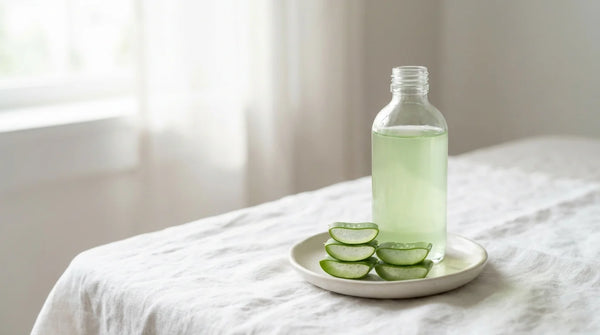
Aloe vera's primary contribution here is acemannan -- a polysaccharide that binds water within the extracellular matrix of the dermis rather than drawing it up from deeper layers or depending on atmospheric humidity. Unlike synthetic humectants such as glycerin or hyaluronic acid, acemannan interacts directly with the dermis's structural matrix, supporting hydration from below while tallow seals from above. A 2015 study in the Journal of Dermatological Treatment found that topical aloe vera improved objective hydration measures without the compensatory drying effect sometimes observed with humectant-only formulas.
Aloe also brings anti-inflammatory compounds -- glucomannan, anthraquinones, polysaccharide complexes -- that address the low-level inflammatory signaling that accompanies a compromised or stressed skin barrier. Coconut oil has some anti-inflammatory properties via lauric acid, but these are secondary to its primary antimicrobial activity and don't address the structural barrier repair that tallow provides. The tallow-aloe combination addresses barrier integrity, hydration, and inflammation simultaneously -- three interdependent problems that benefit from being targeted together rather than sequentially.
This is particularly relevant for anyone with eczema-like or chronically reactive skin, where barrier damage, inflammation, and moisture loss are typically occurring at the same time. Addressing one without the others leaves the cycle incomplete.
What to look for when choosing between tallow and coconut oil
This isn't a one-size-fits-all answer. The better choice depends on your skin type, what you're trying to address, and where on your body you're applying it.
Choose tallow if:
- You're dealing with chronically dry, flaky, or tight skin that doesn't respond well to conventional moisturizers
- You have acne-prone or congestion-prone skin -- tallow's lower comedogenicity rating and sebum-similar profile make it less likely to block pores
- You want barrier repair rather than surface hydration -- tallow's fatty acid profile actually integrates into the stratum corneum's lamellar matrix
- You have sensitive or reactive skin where you're trying to minimize the number of ingredients and potential irritants
- You're applying to your face, where pore sensitivity is highest
Coconut oil may work better if:
- You're using it specifically for its antimicrobial properties in a targeted application -- not as a daily moisturizer
- You have confirmed non-acne-prone skin and have used coconut oil without congestion issues before
- You're applying it as a hair treatment, where its molecular size allows penetration into the hair shaft
- You're looking for a body oil for areas like knees, elbows, or heels, where comedogenicity is less of a concern
For both:
- Look for grass-fed or minimally processed sources -- heat-rendered tallow and cold-pressed virgin coconut oil preserve more of the fat-soluble vitamins and antioxidants than heavily refined versions
- Start with a small patch test if you haven't used either before, particularly on the face
- Apply to slightly damp skin immediately after cleansing for better absorption and to trap a layer of moisture before the fat occludes the surface
The AloeTallow formula
If the fatty acid comparison above describes what you've been looking for -- a lipid-based moisturizer built around grass-fed tallow rather than water or plant oils -- Aloetallow is what we made. It's grass-fed beef tallow combined with aloe vera in a short eight-ingredient formula with no fragrance, no synthetic emulsifiers, and no fillers. The formulation is built around the fatty acid compatibility argument -- tallow as a base that actually resembles human sebum, aloe as a functional partner for hydration and anti-inflammatory support, and nothing else that doesn't need to be there.

8 ingredients. Grass-fed tallow + aloe vera. Nothing you can't pronounce.
FAQ
Is tallow really better than coconut oil for skin, or is this just a trend?
The fatty acid comparison is based on biochemistry, not trend cycles. Coconut oil became popular partly because of genuinely documented properties (particularly lauric acid's antimicrobial activity) and partly because of broad marketing of anything labeled natural. Tallow is making a return based on a more specific claim -- structural similarity to human sebum -- that has actual research support. Whether one is "better" depends on what you're using it for. For barrier repair and daily facial moisturization, tallow's fatty acid profile is a better match to what skin needs. For antimicrobial applications or hair conditioning, coconut oil's lauric acid content is functionally relevant. Treating it as a binary better/worse question loses the specificity that makes the comparison useful.
Does coconut oil actually clog pores?
For some people, yes -- and this isn't anecdotal. Coconut oil's comedogenicity rating of 4/5 reflects a real tendency to block pores in susceptible individuals. The mechanism involves lauric and myristic acids, which can accumulate in the follicular canal in ways that long-chain fatty acids don't. Individual responses vary significantly based on skin type, pore size, and existing sebum production. If you have oily or acne-prone skin and have experienced breakouts after using coconut oil, the fatty acid mechanism explains it. If you've never had this issue with coconut oil, you may simply be less susceptible. For more detail on pore behavior with fat-based products generally, read about what tallow and pores research actually shows.
What about the smell? Tallow has a distinctive odor.
Well-rendered, high-quality grass-fed tallow has a mild, faintly buttery smell that is significantly subtler than most people expect from the description. The strong smell people sometimes associate with tallow is usually from poorly rendered fat or low-quality sourcing. A properly rendered and filtered tallow has an odor profile closer to unscented butter than the gamey smell people imagine. When combined with aloe vera, the scent is further moderated. Coconut oil's smell is more neutral but also more polarizing -- its characteristic tropical scent comes from medium-chain fatty acid esters that some people find pleasant and others find overwhelming. Neither is fragrance-free in the way a synthetic lotion can be engineered to be.
Can you mix tallow and coconut oil together?
You can, and some people do. Tallow would contribute the barrier-compatible long-chain fatty acids -- oleic, palmitic, stearic. Coconut oil would contribute lauric acid's antimicrobial activity and some additional occlusion. The blend would carry a higher comedogenicity risk than tallow alone, so it's not ideal for acne-prone skin. For non-acne-prone dry skin, the combination is less problematic. The bigger practical issue is that coconut oil's high lauric acid content would dilute the sebum-similar fatty acid profile that makes tallow specifically effective for barrier repair. If the goal is barrier compatibility, tallow on its own is a cleaner solution. If the goal is antimicrobial surface protection for intact skin, coconut oil alone or in a blend accomplishes that.
What about other plant oils -- olive oil, jojoba, argan?
Each has a different fatty acid profile and a different best-use case. Jojoba is technically a liquid wax rather than an oil -- it contains wax esters similar to those in sebum, which is why it's often touted as sebum-mimicking. Olive oil is high in oleic acid (~70%) and has been used topically for centuries, but a 2013 study in Pediatric Dermatology found that repeated olive oil application actually impaired barrier function in neonates, possibly due to disruption of the lamellar bilayer by oleic acid applied without the complementary fatty acids that normally accompany it. Argan oil is high in oleic and linoleic acids with a favorable vitamin E content. None of these provides the full fatty acid ratio -- oleic, palmitic, stearic, and palmitoleic together -- that tallow provides naturally. If you're interested in why beef tallow for skin has a different mechanism than plant oils, the fatty acid ratio argument is the most important piece to understand.